
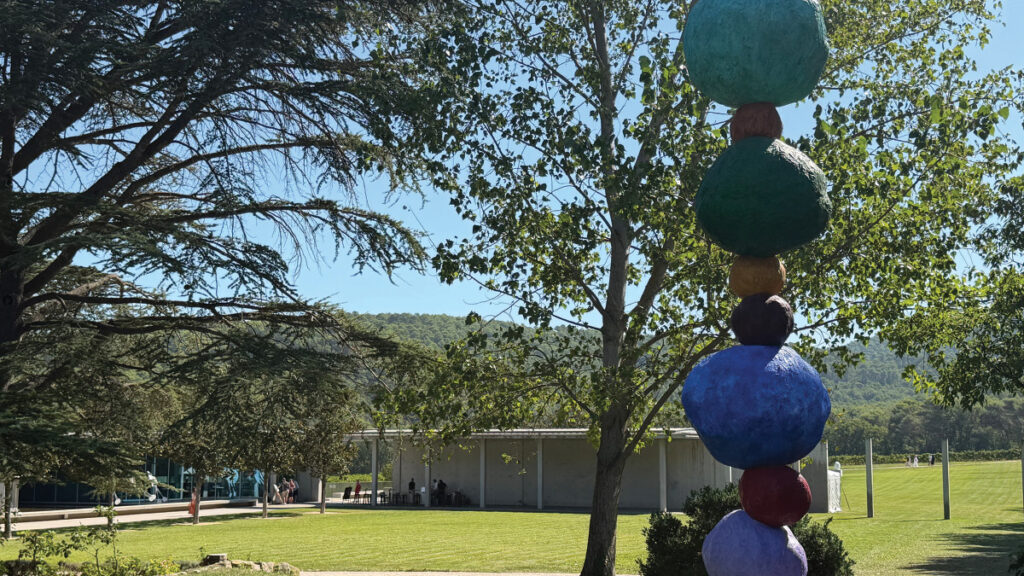
In June, I wrote about sculpture and the importance of integrating it into an art plan. Yet sculpture need not remain indoors. Outdoors, art enters a richer conversation with architecture, changing light and the natural world.
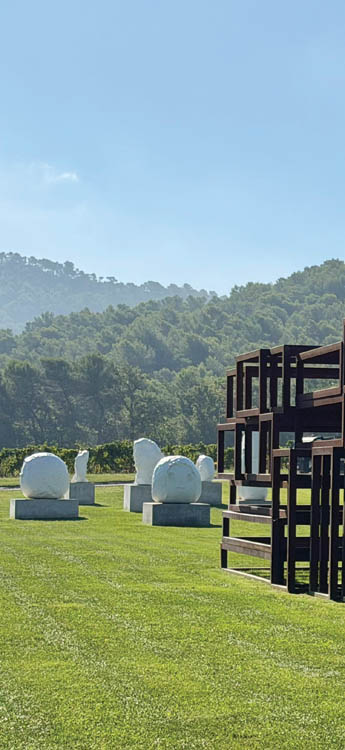
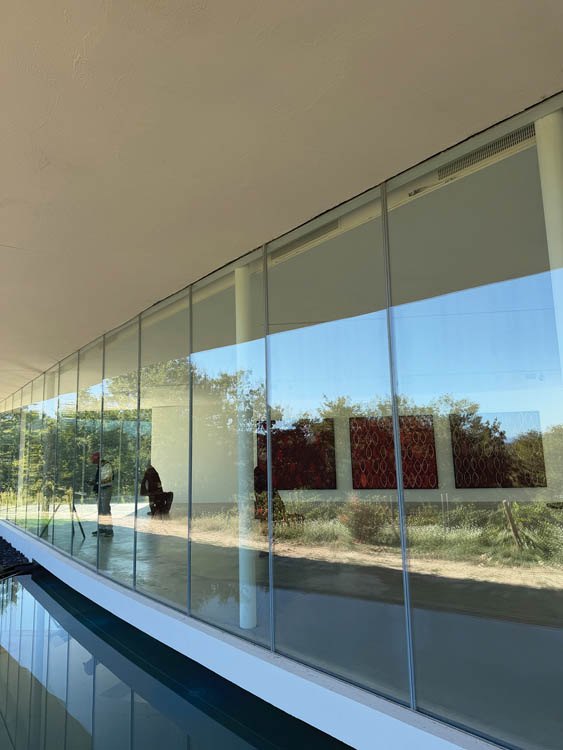
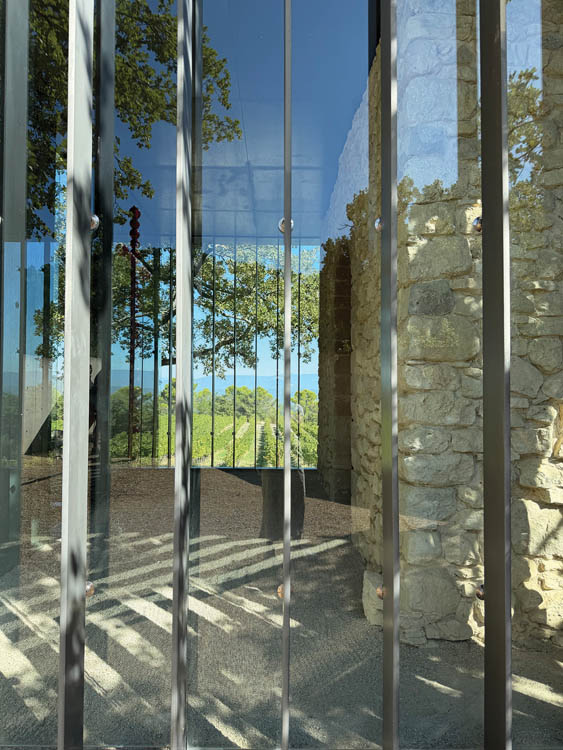
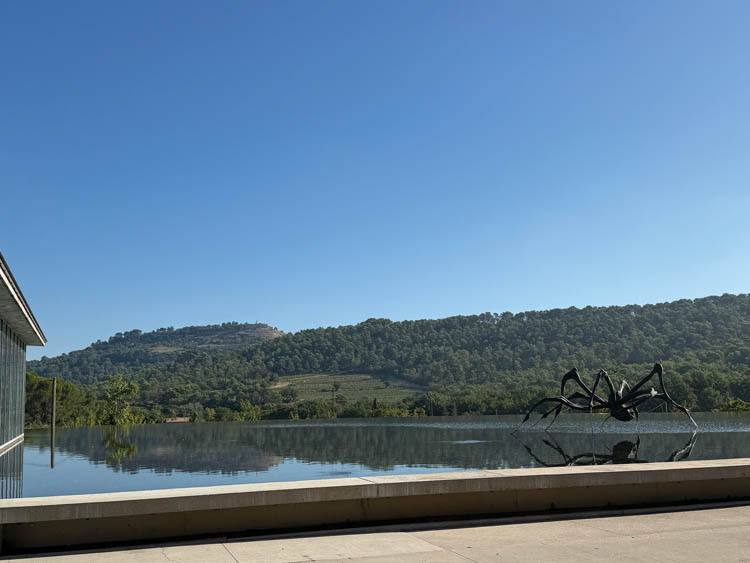
A recent visit to Château La Coste, near Aix-en-Provence, brought that idea vividly to life. Across its vineyards and Provençal landscape, contemporary art and architecture unfold as a journey rather than a display. Tadao Ando’s contemplative structures possess a quiet rigor, while Louise Bourgeois’ Crouching Spider appears poised above a reflecting pool, appearing to occupy both earth and sky. Bourgeois often associated the spider with her mother, transforming an image that might seem threatening into one of intelligence, patience and care.
That experience also connected directly to home. The Pulitzer Arts Foundation here in St. Louis was Ando’s first public commission in the U.S. Within its precise geometries, shifting natural light and central water court, Richard Serra’s Joe anchors the courtyard. Art and architecture do not simply coexist there; each heightens our perception of the other.
This dialogue between object and setting is what makes sculpture parks so compelling. At the Chinati Foundation in Marfa, Donald Judd’s concrete works stretch across the desert. Storm King Art Center in New York’s Hudson Valley transforms 500 acres of hills, meadows and woodland into an outdoor gallery. In Dallas, the Nasher Sculpture Center pairs luminous galleries with a serene garden. And here at home, Laumeier Sculpture Park offers monumental art across 94 acres of woods and lawns.
Moving through these sculptural landscapes changes the way we read our own interiors. A chair becomes newly compelling for its silhouette; a light fixture, for the shadow it casts. One unexpected, artful element can shift the energy of a room and give it a layered, personal identity. The lesson is not to reproduce what we have seen, but to become more sensitive to proportion, rhythm, material and space.
The same thinking applies outdoors. Begin with the view and consider how a sculpture will be discovered from a window, terrace or pathway. Allow it breathing room. Lighting should reveal form after dark without overpowering it.
The best sculpture gardens never feel crowded. They balance art with space, shadow, season and surprise. Whether planning a private garden or visiting one abroad, the most successful settings remind us that landscape is more than a backdrop—it is an active collaborator.
The next time you travel, seek out a sculpture park, or reserve one day each month to explore one closer to home. When we experience art, architecture and nature together, we return to our own spaces seeing them entirely differently—and that may be the greatest inspiration of all.
FAITH’S TIPS: BRINGING SCULPTURE HOME
- Begin with the sightline. Consider how the piece will be discovered from a window, terrace, pathway or entry.
- Respect scale—and negative space. Sculpture needs room to breathe. A single, beautifully placed work is often more powerful than several competing pieces.
- Let material respond to its surroundings. Bronze warms against foliage, stainless steel reflects light and movement, and stone feels grounded and timeless.
- Think beyond traditional sculpture. A sculptural chair, bench or light fixture can become an unexpected artistic element indoors or out.
- Use lighting with restraint. Illuminate the form rather than flooding the entire area; shadow is part of the composition.
- Make sculpture part of your itinerary. Seek out sculpture parks when you travel, or reserve one day each month for a local visit. Repeated exposure sharpens the eye and renews the way we see our own surroundings.
Faith Berger is a St. Louis-based artist, working in acrylic, mixed medium collage, and the co-author of It’s About Time, No. 1 on Amazon in Woman’s Survival. Visit her website at faithberger.com, find her on Instagram faithberger.art, or reach her via email at faith@faithberger.com.