
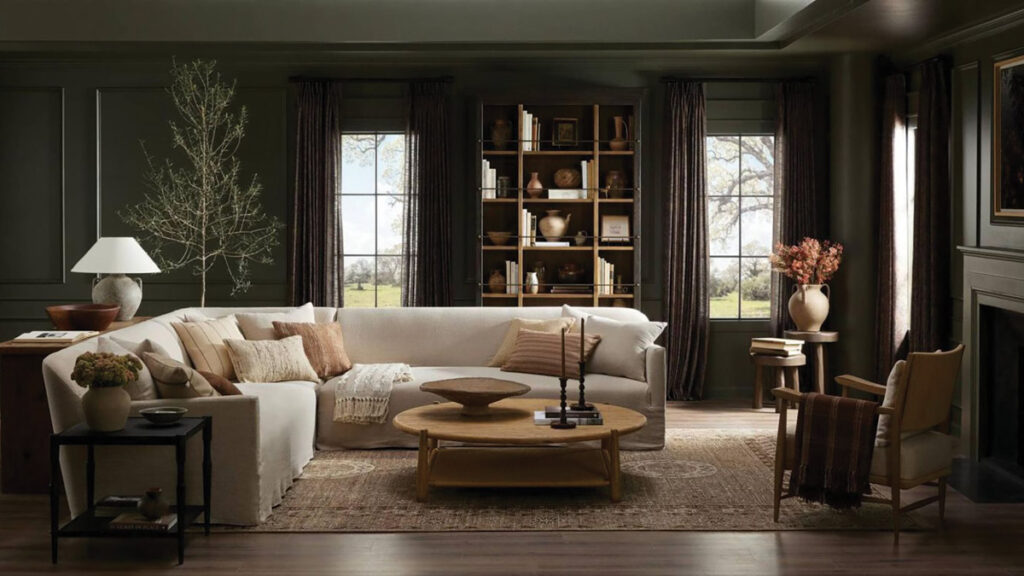
If there’s one piece we’re asked about more than any other, it’s the coffee table. And we get it—it’s the heart of the living room. It sets the proportions of the whole seating area, holds everything from your morning coffee to a Friday-night board game, and it’s almost always the first thing a guest’s eye lands on. Get it right, and the room feels collected and complete. Get the size or height even a little off, and somehow the whole space feels unsettled. So let’s walk through every decision together, the way we would with a client, so you can buy once and love it for years.
How do I choose the right coffee table?
We always work through five decisions in order, because each one quietly narrows the next:
- Size — Measure your sofa and the open floor first.
- Shape — Match the table’s footprint to your seating layout and the way you move through the space.
- Height — Line up the top with your sofa seat so reaching for a drink feels effortless.
- Material & Style — Choose for the life your living room actually leads, and the style you’re building.
- Storage — Decide whether you want an open display, a shelf or hidden storage.
Most of us shop the opposite way. We fall for a gorgeous finish first and end up with a table that’s too big, too tall or far too precious for everyday life. When you start with these fundamentals, the right table becomes much easier to spot.
What size coffee table do I need?
Three proportional rules cover almost every living room we style:
- Length: Aim for about two-thirds the length of your sofa. A standard 84-inch sofa loves a coffee table that is 48 to 54 inches long.
- Clearance: Leave 14 to 18 inches between the sofa and coffee table. This gives you enough room to move comfortably while keeping the table within easy reach for drinks, books and everyday use.
- Walkways: Ideally, leave 36 to 40 inches of clearance around the seating area so the room feels comfortable and easy to move through. In tighter spaces, 30 inches is typically enough to maintain good flow.
What shape of coffee table works best for me?
Shape really comes down to your seating layout and how people move through the room.
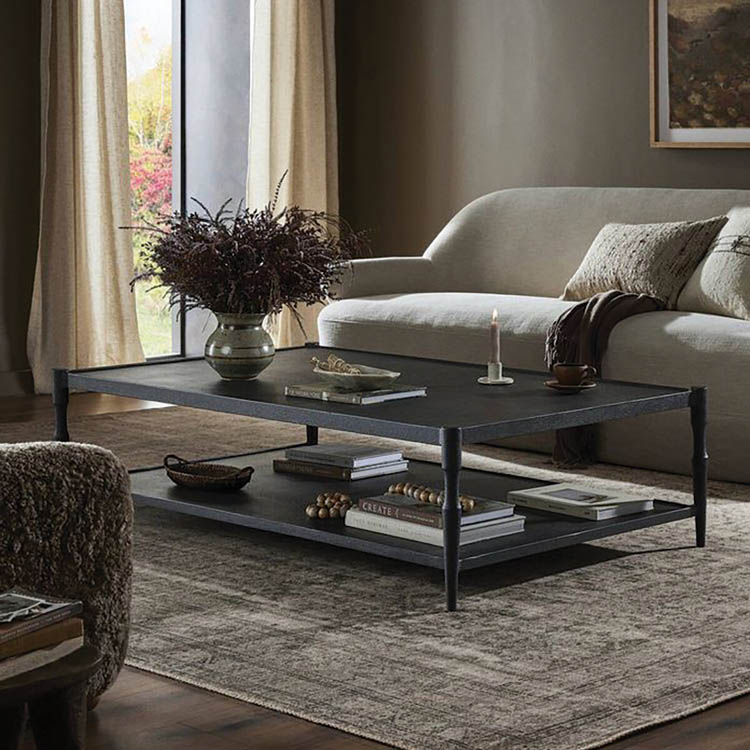
- Rectangular Coffee Table: Rectangular is the classic for good reason — it echoes the line of a standard sofa and gives you the most surface to work with. We love it for formal or symmetrical living rooms.
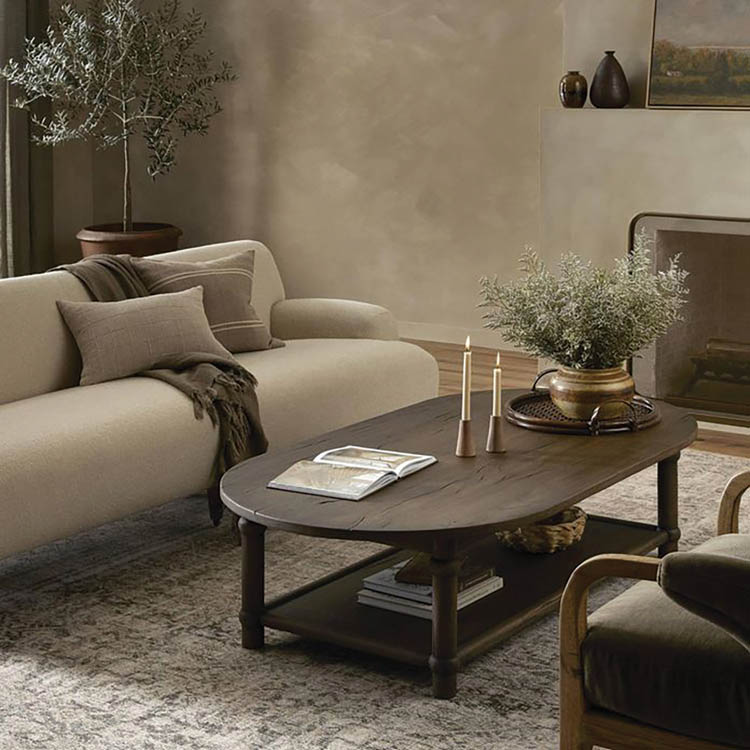
- Oval Coffee Table: Oval coffee tables are especially helpful in longer rooms, where their curved silhouette helps break up all the straight lines and creates a softer, more linear flow through the space. An oval coffee table softens a longer sofa beautifully and is often a practical choice for homes with young children thanks to its rounded edges. The shape feels inherently more relaxed, bringing a sense of ease that can make a seating area feel more inviting.
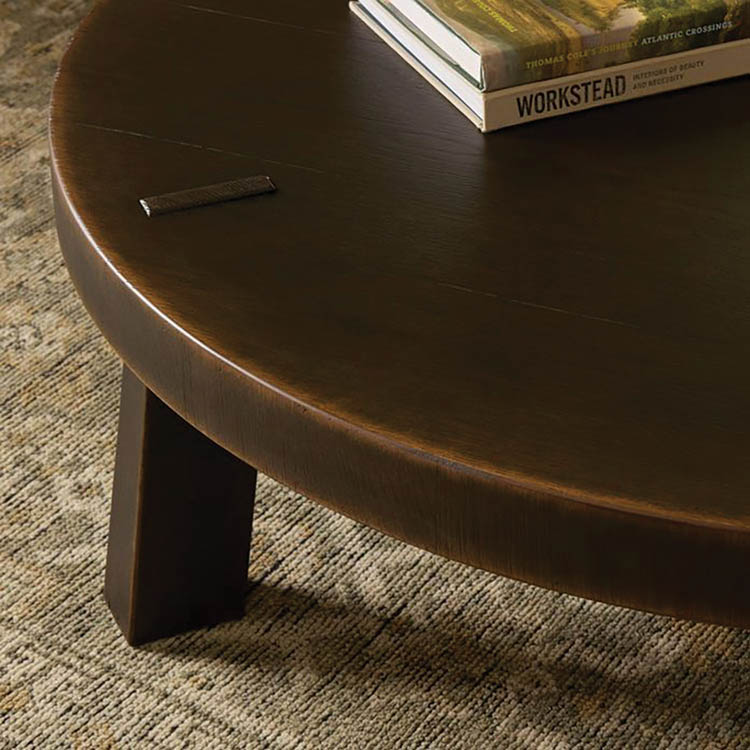
- Circular Coffee Table: Circular tables are a quiet problem-solver. It’s wonderful in small spaces, around sectionals and in high-traffic rooms—no corners to catch a knee, and it creates a softer flow through the room. A round coffee table also brings a welcome curve into a room full of straight lines. If your sofa is an L-shaped sectional, a round table tucked into that inside corner is almost always the most comfortable choice.
- Square Coffee Table: Square shines with oversized accent chairs or when you have two sofas that make an L-shape. It does ask for more floor than a round table of similar reach, so we save it for roomier spaces.
How tall should my coffee table be?
The top of your coffee table should sit level with your sofa cushions, or up to 1–2 inches below. Most sofas seat at 17–19 inches, so most coffee tables land in that 16–18 inch range. With a table at cushion height, reaching for a drink feels effortless; much lower and you’re stooping; much taller and it starts feeling like a dining table.
Scout & Nimble is a retail site and blog that aims to make expert design accessible to all. Follow at blog.scoutandnimble.com.