
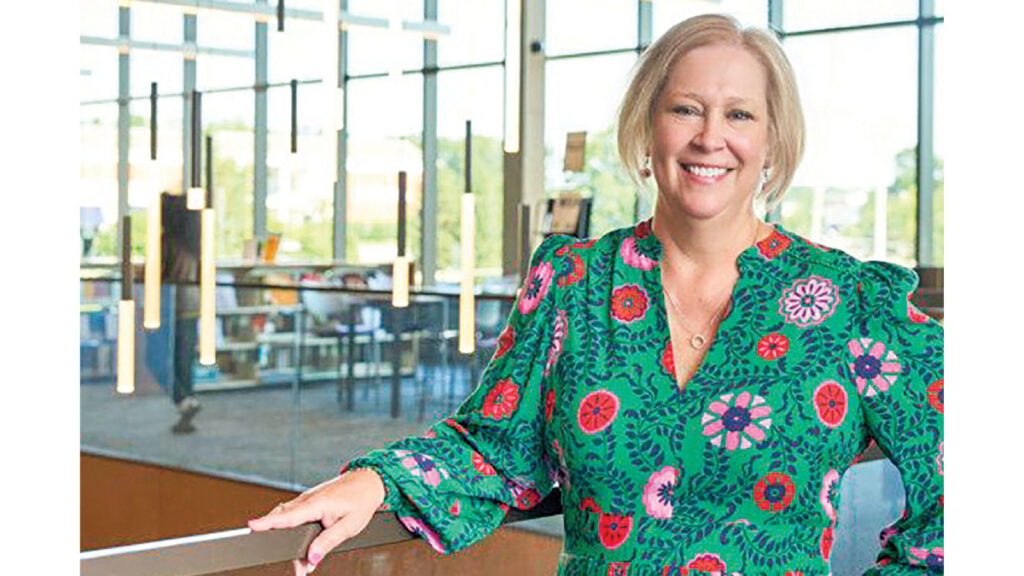
frontenac | Your county library isn’t just a place where you can check out books. Nor has Kristen Sorth, who’s retiring in January as director and CEO of St. Louis County Library (SLCL), been just your average librarian: She’s a mover and shaker who has grown SLCL into a major proponent of civic engagement and social change. Upon leaving the library, Sorth will join Clayco to lead the Office of Civic and Social Impact & Giving. Her deep and varied experience since she joined SLCL in 1998 indicates that she will fit comfortably into her new role. Under her leadership, Sorth and her administrative team are responsible for leading the multimillion-dollar Your Library Renewed capital improvement campaign. She also helped build community partnerships, introduced social workers to the library, created a Justice Services Department and rapidly mobilized a multi-sector response when federal legislation for the Radiation Exposure Compensation Act affected thousands of local residents. “Working for St. Louis County Library has been such a gift,” says Sorth. “I’ve grown up here both personally and professionally. My first years were focused on our employees and operations, and for the last 13, I’ve had the honor to lead SLCL through rapid, successful change both in the services we provide and in the buildings where we provide them.” SLCL’s Board of Trustees hopes to announce Sorth’s replacement soon.

chesterfield
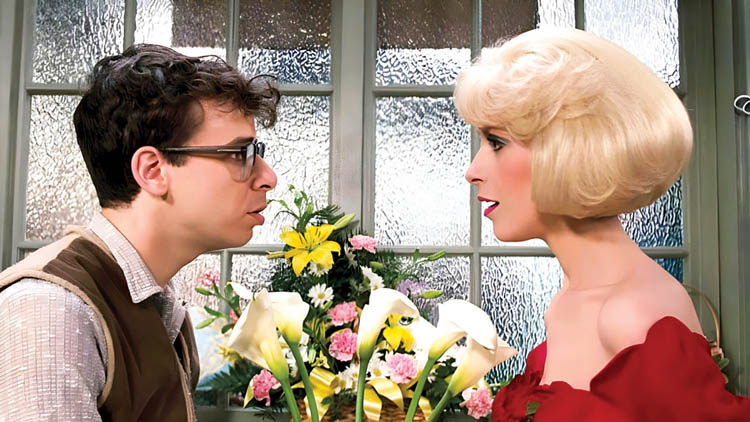
The 1980s were a decade for horrifically comic productions based on lurid, gruesome subject matter. Take Sweeney Todd: The Demon Barber of Fleet Street, an old Victorian story that was adapted for a Stephen Sondheim musical with a ridiculous premise. The barber, ostensibly shaving a customer, instead would slit his throat, whereupon the chair tilted and dumped him through a trapdoor for his female partner in crime to bake into a pie. Pretty gross and funny, in a gallows-humor sort of way. A little lighter, if you will, was Little Shop of Horrors, a musical adapted from the cult-classic 1960 sci-fi comedy about a nerdy florist in a shop on Skid Row who falls for his cute co-worker, Audrey. They’re the fauna, but the flora is the main character—Seymour has cultivated and is nurturing Audrey II, a bloodthirsty, man-eating plant that gets increasingly more voracious as the silly story unfolds. Ellen Greene, who played Audrey both on stage and in the 1986 film adaption of the musical, is back, live and in person, accompanying a special touring screening to celebrate the movie’s 40th anniversary. Greene will take questions and add levity, as if this goofy movie doesn’t have plenty enough of it already. The show comes to the Factory in Chesterfield Valley at 7:30 p.m. Jan. 22. For more information or tickets, hoof it on over to thefactorystl.com.


kirkwood
Although Walmart and its tech partner Wing think delivery drones will soon be a customer-service rave, Kirkwood is now among local municipalities that have firmly said, “No, thanks.” In October, the City Council effectively killed a proposed drone-delivery facility at the Walmart on South Kirkwood Road after residents raised concerns about noise and neighborhood impacts. Opponents of the idea have vigorously protested throughout the metro. Maplewood saw organized public opposition during presentations by Wing. Residents expressed concerns about drone noise, privacy, effects on pets, potential impact on wildlife and the quality-of-life effects. Manchester residents and aldermen raised privacy concerns, prompting Wing representatives to address questions about cameras and surveillance. Other communities approached by Walmart included St. Charles, High Ridge and Glen Carbon, Illinois. Discussions and reviews have occurred in those locations, but the clearest evidence of organized or successful resistance has been in Kirkwood and Maplewood. At press time, it appears that none of the proposed drone hubs in St. Charles, Wentzville, Kirkwood, Maplewood, Manchester or Glen Carbon had yet received final approval, reflecting varying degrees of community and municipal scrutiny. What’s more, my wife and I just wonder what sort of reaction a drone in the neighborhood would cause among kids with a taste for mischief. When you’re awaiting delivery of your half gallon of milk (just a little more would make the aircraft too heavy), even a good kid could go a little bad: “Hey, look, a new toy!”


notable neighbors
dutchtown south
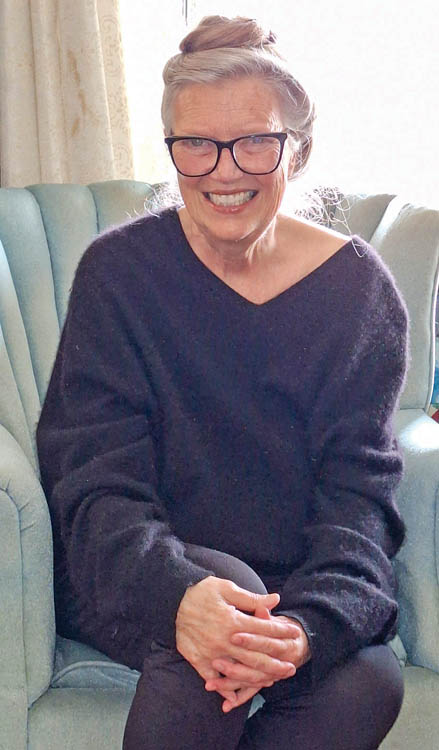
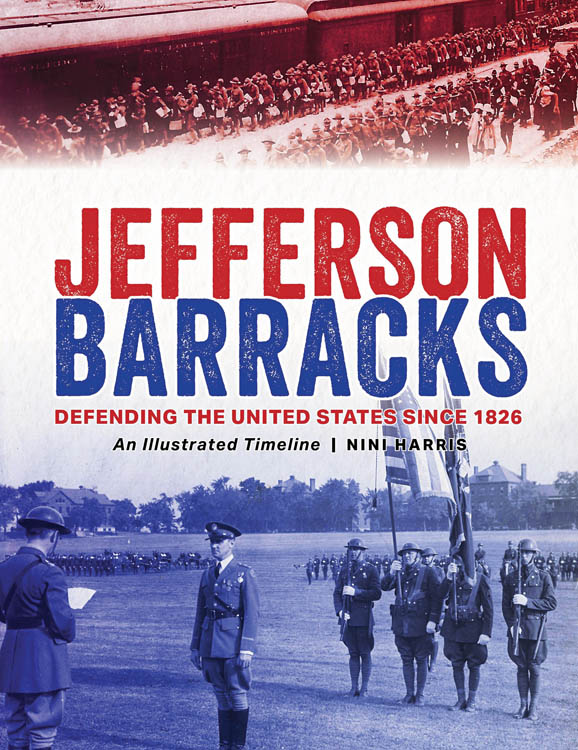
The South St. Louis neighborhood where NiNi Harris and her husband live is referred to as Dutchtown South, but lifelong residents typically call it by another name: St. Cecilia historic district, based on the venerable parish that is essential to its social fabric. An inveterate historian, Harris has written 20 books about her beloved hometown, having grown up a block or so from the circa-1925 church on Alaska Avenue, today living in the same house she did as a girl. In fact, we met her on a recent Sunday morning on St. Cecelia’s front steps. The church has served the immigrant population of this neighborhood since its early days, when the population was largely German (thus Deutsch-town). Gradually, refugees from Eastern Europe came en masse after World War II. Meanwhile, many German-American families started leaving for the suburbs, helping grow communities such as Affton, Mehlville and Oakville. And in the late 20th century, Hispanics settled here, changing St. Cecelia’s demographic. Many masses are in Spanish today. “Living in this neighborhood taught me to love history— I didn’t get it from a book,” Harris says with a wry smile. We left the sanctuary as it filled rapidly for the 11 a.m. service and drove to a small Holly Hills grocery to chat over coffee about her latest Reedy Press book: Jefferson Barracks: Defending the United States Since 1826, an Illustrated Timeline. “Most people are aware of Jefferson Barracks as just the cemetery,” notes Harris, whose family has picnicked on the grounds since she was little. “Part of the attraction for us certainly was its beauty, but much of it is the mystery,” she says. For many other locals, J.B. was just the place at the end of the streetcar line. Harris has pulled back the curtain on the 1,700-acre expanse that contains the Missouri National Guard post, the V.A. Hospital and a national cemetery where veterans and soldiers from the Mexican-American War, World War II, Korea, Vietnam and the Middle East have been laid to rest. “With the World War II generation disappearing, I thought it was important that their stories were there and easily accessible,” Harris emphasizes. At first, veterans were loath to discuss the horrors they had witnessed. But when they got to be 60 and much older, they felt compelled to share their stories. A large portion of the cemetery and Harris’ book have been set aside for combatants on both sides of the Civil War. The personal stories are rich and varied. James Longstreet, a significant Confederate general, cemented a lifelong friendship with future president Ulysses S. Grant at Jefferson Barracks. Fast forward to 1943, when FDR made a surprise visit to the barracks as he traveled in secret for inspections at military posts nationwide. Though the flag waving over the active military base was lowered in 1946, Harris has made it feel very much alive. Her next book signing is Nov. 28 at the Foundry complex in Downtown West.