
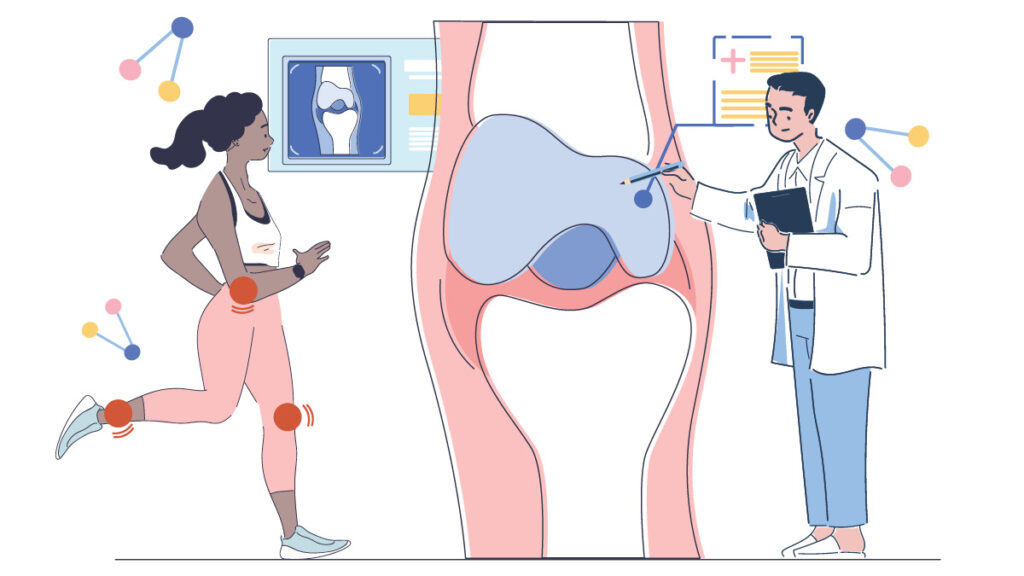
Whether you’re feeling stiff or hearing a few extra creaks when you stand up, it’s no secret that our bones and joints change as we get older. But that doesn’t make it any less important to stay active.
JOINTS
According to the Centers for Disease Control and Prevention (CDC), more than half of adults over the age of 75 have some form of arthritis. If you’re dealing with stiff or painful joints, the prospect of hitting the pickleball court, cycling or even just taking a walk can seem daunting. But keeping active can have big benefits for your joints. It helps lubricate them to prevent stiffness, increases blood flow, decreases inflammation and strengthens muscles, which helps brace and protect joints.
exercises for joint health
Range-of-motion: These exercises are designed to move your joints through their full range of motion so you can improve flexibility. Examples include shoulder rotations, arm stretches, leg lifts, and hip and knee bends.
Strength training: Strong muscles help support and protect joints. Weight training is a great way to build muscles. Hand dumbbells and resistance bands are easy ways to exercise at home if you don’t want to hit the gym.
Aerobic: Physical activity that raises your heart rate benefits your overall fitness, including cardiovascular health, weight, mental health and energy. Examples that have lower impact on joints include walking, cycling and aquatic activities like swimming and water aerobics.
BONES
As we age, we naturally lose some bone density, which can lead to osteoporosis. The condition puts us at greater risk for bone fractures. Physical activity can help prevent bone loss and even improve bone density. Plus, maintaining strong muscles helps with balance and reduces the risk of falling and breaking bones.
exercises for bone health
Weight-bearing: These exercises use the force of gravity on your body. By working against your own weight, your bones are pushed to become stronger and more dense. Examples include walking, jogging, racket sports and dancing.
Resistance training: These activities use increased resistance to make your bones and muscles both work harder. Instead of your body providing the force, things like weights and resistance bands are used.
Balance training: Improving your balance can help decrease your risk for falls and bone fractures. Balance-boosting activities include tai chi, step-ups, lunges and walking on an unstable surface such as foam mat or wobble board.
WEEKLY WORKOUT
The CDC recommends that adults over the age of 65 do the following every week:
- Aerobic exercise that includes at least 150 minutes at moderate intensity
activity or 75 minutes at vigorous intensity. You can also do a combination of both moderate and vigorous intensity. - At least two days of activities that strengthen muscles.
- Exercises that improve your balance.
MAKE THE MOST OF YOUR WORKOUT ROUTINE
Warm up. Starting with more gentle movement can improve your flexibility and prepare you for more intense activity. Begin with stretching and range-of-motion exercises before starting strength training, weight-bearing exercises or
aerobic activity.
Listen to your body. Don’t overdo it and cause injury. If you start to feel pain or notice swelling or inflammation, take a break and consider altering your workout routine. Slowing down is better than risking serious damage.
Stick with low-impact exercises. These will put less stress on your joints and bones.
Use heat before. This will help relax your joints and muscles, leading to less pain. You can use warm towels, heat packs or take a shower before you begin your workout.
Apply ice after. Icing your joints after activity can reduce pain and inflammation. Apply ice for up to 20 minutes following exercise. It is also beneficial for treating injuries like strains or sprains.
HOW ELSE DOES EXERCISE BENEFIT YOUR MIND & BODY?
- Improves cholesterol and blood sugar levels
- Reduces blood pressure and boosts circulation
- Improves energy level and well-being
- Supports healthy mood and sleep
- Combats stress, depression and anxiety
- Fights boredom
- Helps cope with isolation
Sources: National Institutes of Health, Mayo Clinic, Centers for Disease Control and Prevention