

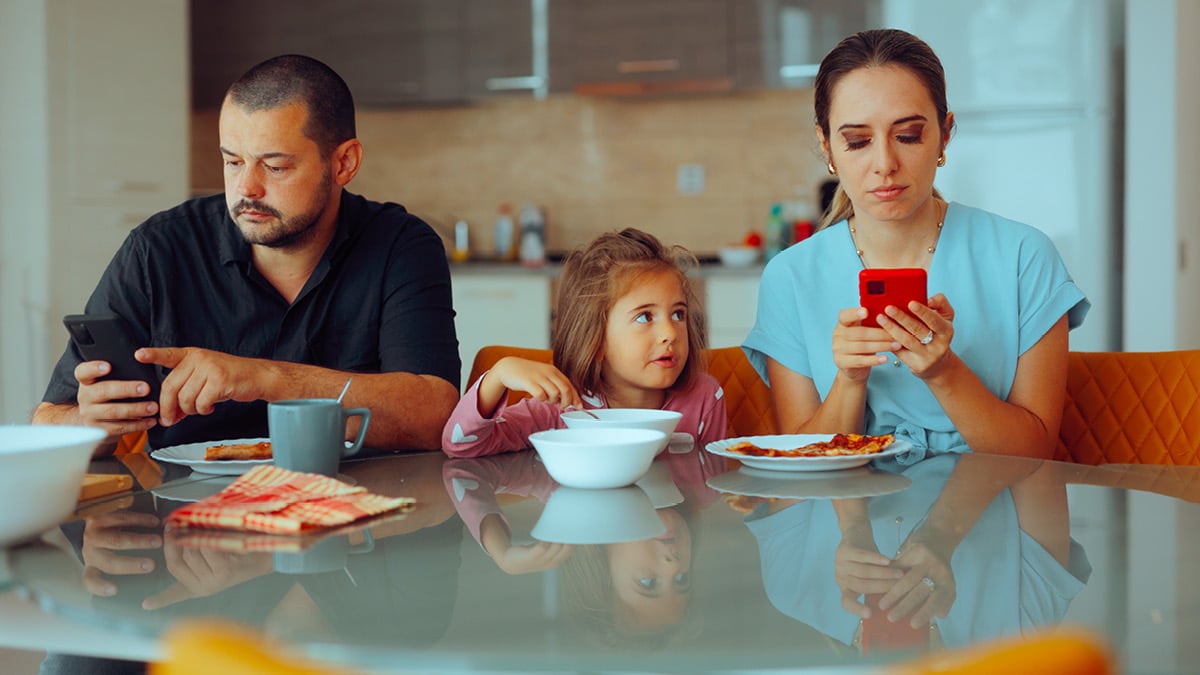
My wife Anne and I have done an enlightening role play at parent presentations for years, and its message is even more important today. We send half the group out of the room. When they come back in, they pretend to be a kid who is coming to share a butterfly they caught with their parents. The first time they come in, we instruct the “parents” to act really preoccupied by looking at their phones. After a minute, we ask the “kids” how they felt being with this distracted parent and their responses are telling. They don’t report that they just wanted some attention; they share that they felt unimportant and unloved. The “kids” go back out and when they return this second time the “parents” are coached to give them 100% of their attention. The result is that these “kids” feel important, happy and loved.
I worry that too many kids today experience what the first group did: being around distracted parents who aren’t fully present. I also worry about what we adults are modeling for our children. A survey in 2025 found that adults check their phones nearly 200 times per day—or once every five minutes. Another estimate found that adults spend about 4.5 hours a day on their phones, two of which are devoted to social media alone. Studies have shown the mere presence of mobile phones inhibited the development of interpersonal closeness and trust, and reduced the extent to which individuals felt empathy and understanding from their partners. These effects were most pronounced if individuals were discussing a personally meaningful topic.
Just having a phone out can dumb down your conversations. One antidote to this problem is for your family to commit to phone-free times when you are together.
Have a family meeting to share how everyone feels when family members are glued to their phones and devices 24/7. Discuss times when everyone can commit to being phone- and device-free. Some examples might include: family mealtimes, car rides and walks. It could include attending sports games, recitals, theater productions, relaxing at the pool or awards ceremonies. You could decide it includes any kind of special occasion like family get-togethers or any social time.
By the way, it’s more than OK for kids to be bored, as boredom has been shown to be closely linked to a child’s capacity to play contentedly alone while in the quiet presence of a parent. To develop the capacity for solitude, you must allow kids to be bored and then turn within instead of to a screen. This is a critical sign of psychological health.
Another gift from your new commitment is that you will be modeling the significance of being fully present and engaged with them and whatever you are doing. It is invaluable for your children to see you spend time unplugged, quiet and calm. Model that you can be happy and content without constant entertainment and distractions.
When your child brings you a butterfly, report card, question or hurt feelings, get on their level and be fully present to give them the gift of your unconditional love and support.
Tim Jordan, M.D., is a Behavioral Pediatrician who counsels girls aged grade school thru college. Listen to his weekly podcast, Raising Daughters, to gain information on raising strong, resilient girls. For more info on Dr. Jordan’s retreats, summer camps and books visit drtimjordan.com.