
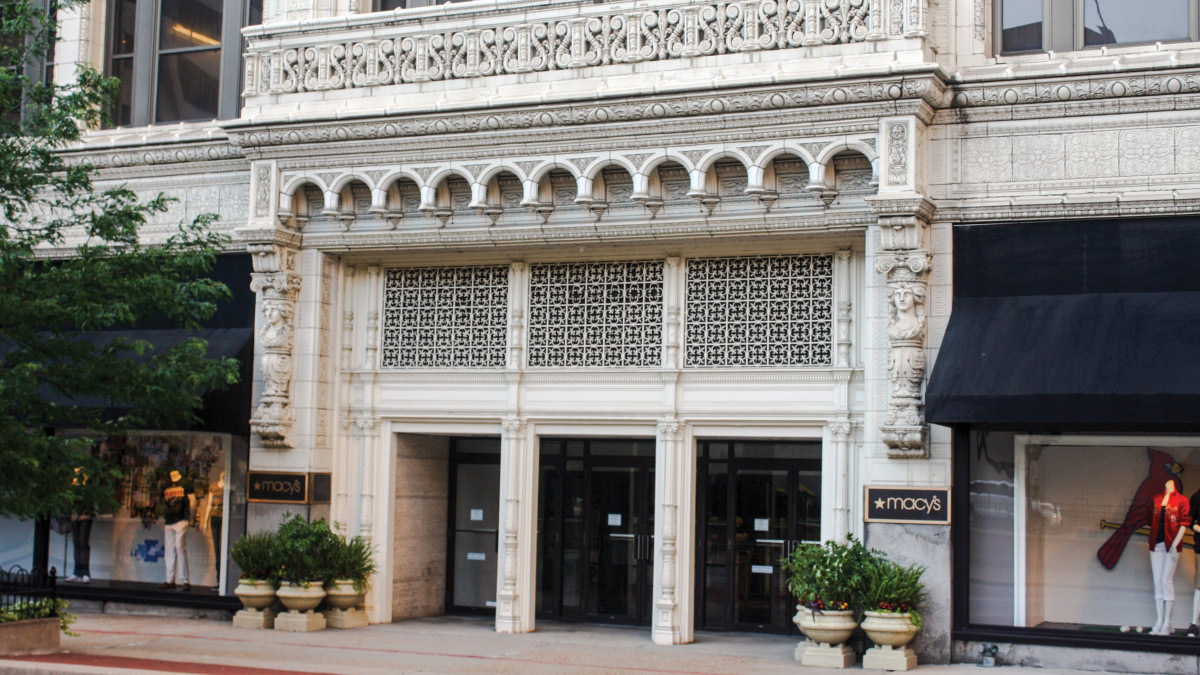
downtown | The Railway Exchange Building, a unique 21-story terra cotta commercial building which occupies a full city block downtown and is on the National Register of Historic Places, has been a magnet for thieves, vagrants and other ne’er-do-wells for years. Built in 1914 as an administrative hub for the many railroads that operated in the region, it later became the headquarters of May & Co.’s flagship department store, Famous-Barr. Macy’s bought May in 2005, and as suburban malls and shopping centers proliferated, the fortunes of downtown shopping destinations dimmed. The Macy’s store closed in 2013, ending nearly a century of continuous retail use. The model-train layout, a perennial holiday attraction, is now at the National Museum of Transportation in southwest Kirkwood, and since 2014 the building has been vacant and a redevelopment thorn in the city’s side, despite its historical significance and prominence in the central core. City boosters have long hailed it as key to our urban redevelopment, along with the 44-story, former AT&T tower, also vacant. Such giant buildings aren’t struggling because they lack value—their sheer size magnifies every challenge: cost, complexity, financing risk and market uncertainty. The Railway Exchange is too big to fail—and too big to fix easily. Doing nothing is expensive, too. Among immediate challenges are security and insurance for its present owner: Hudson Holdings, a Florida-based historic property developer. The StL’s Land Clearance for Redevelopment Authority (LCRA), has initiated eminent-domain proceedings to take control of the building due to prolonged vacancy, safety issues and unpaid liens. The courts have set an acquisition price (variously reported around $4.75–$7.3 million, depending on parcels and appraisals). But with the upper floors having so much windowless space, and any exterior detailing impossible to recreate for historical accuracy according to its 2009 inclusion in the National Registry, what then? Interior apartments with no windows would be undesirable. And who is looking for downtown office space these days, anyway?

the metro
With the rapid growth of cloud computing and the imminent explosion of AI capability, data centers are on everyone’s minds. NIMBY, some residents crow. It’ll eat up too much water and power to operate in our neighborhood, they fear. “Bah,” developers say. But just wait a sec, Mr. Deep Pockets. In these parts, data centers are no longer treated as neutral ‘tech infrastructure.’ In the metro, they are increasingly viewed as heavy industrial uses whose benefits must be proven, not assumed—we are the Show-Me State, after all. The metro and St. Louis region at large have become a microcosm of the national data-center backlash. The disputes span St. Louis city and county, St. Charles, the Metro-East and surrounding Missouri communities and counties, such as Festus in Jefferson County and Foristell in St. Charles/Warren counties. The debates share common themes around energy use, water, zoning, public trust and equity. Festus became a national flashpoint, becoming front-page news because residents opposed a large AI-oriented data center approved by their city council. After approval, voters ousted nearly every council member who supported the project, plus a resident group filed a lawsuit alleging Sunshine Law violations (improper closed-door meetings). Key concerns: Water consumption at hyperscale levels, power costs and long-term infrastructure strain, and perhaps most important, a perceived lack of honesty and openness in negotiations. In the city, the newest incarnation of the Armory and adjacent Famous-Barr warehouse complex is as a data center. Similar concerns here and in other scenarios have resulted in different language used in zoning and other documentation. Since this industry and its clients’ needs are continuously evolving, lawyers and other officials are learning as they go.
city museum
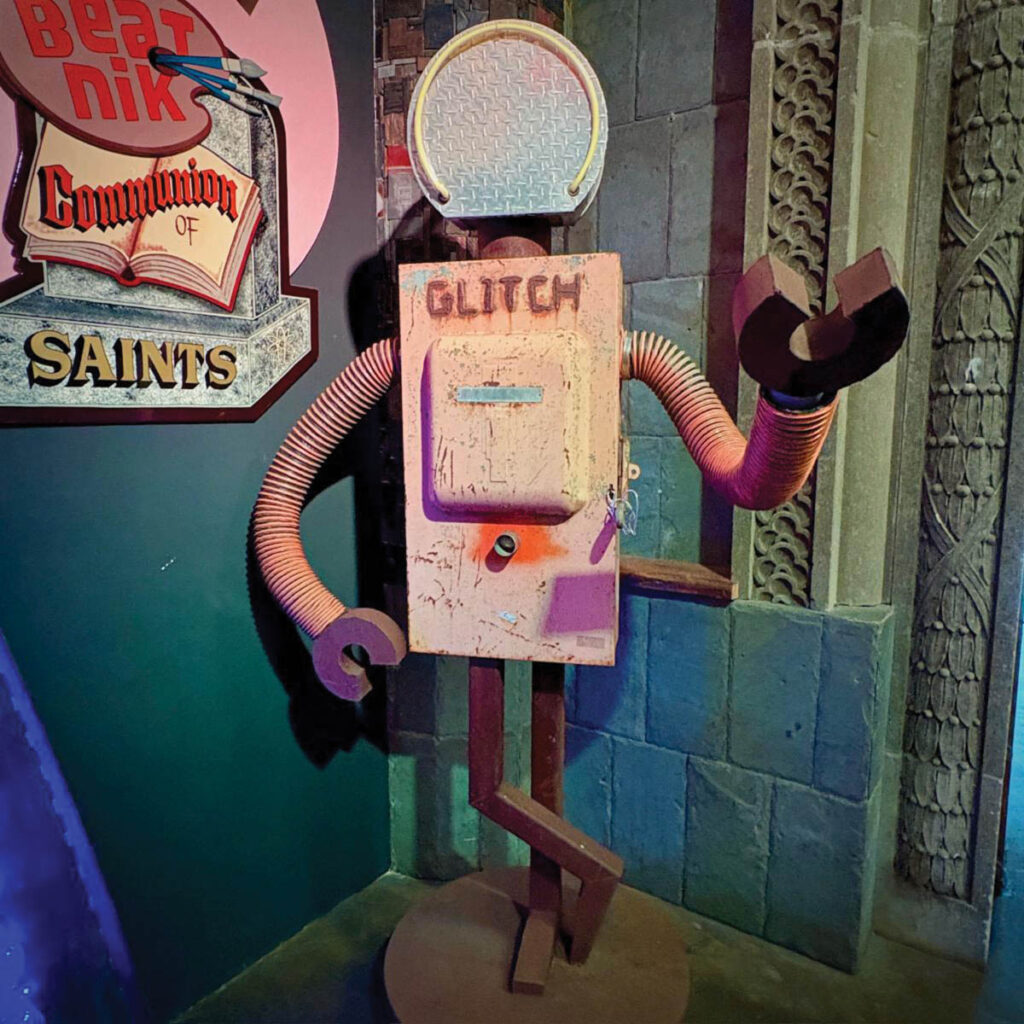
Robots were being singled out among the humans at City Museum as the VEX Robotics World Championship wound down April 30 at the America’s Center convention complex downtown. These particular, peculiar robots were built by St. Louis artists Bill Christman and Dave Rudis using everyday ‘found’ objects. Some of them light up and such, but are all art inspired by robots, not bona fide robots themselves as they were imagined back in the comic books and film representations of the mid-1900s. Guests can visit the Robot Renaissance exhibit in the Beatnik Bob’s section of City Museum through May 31. “My body of work takes everyday discarded materials and transforms them into artistic compositions,” Rudis says about the creative process behind his sculptures. “The majority of materials used were destined for landfills; we find items in dumpsters, alleys, on roadsides or people in the community provide them. Creations are either assembled with mechanical fasteners or welded. The materials used can vary from kitchen drawer handles, old lamps, miscellaneous scrap metal to whatever I can find.” And they’re all for sale. Come join the Robot Renaissance and find the kind of eclectic enlightenment only City Museum can offer. This exhibit is included with museum admission or a member pass. Learn more about these innovative and amusing critters at citymuseum.org.

notable neighbors
maplewood
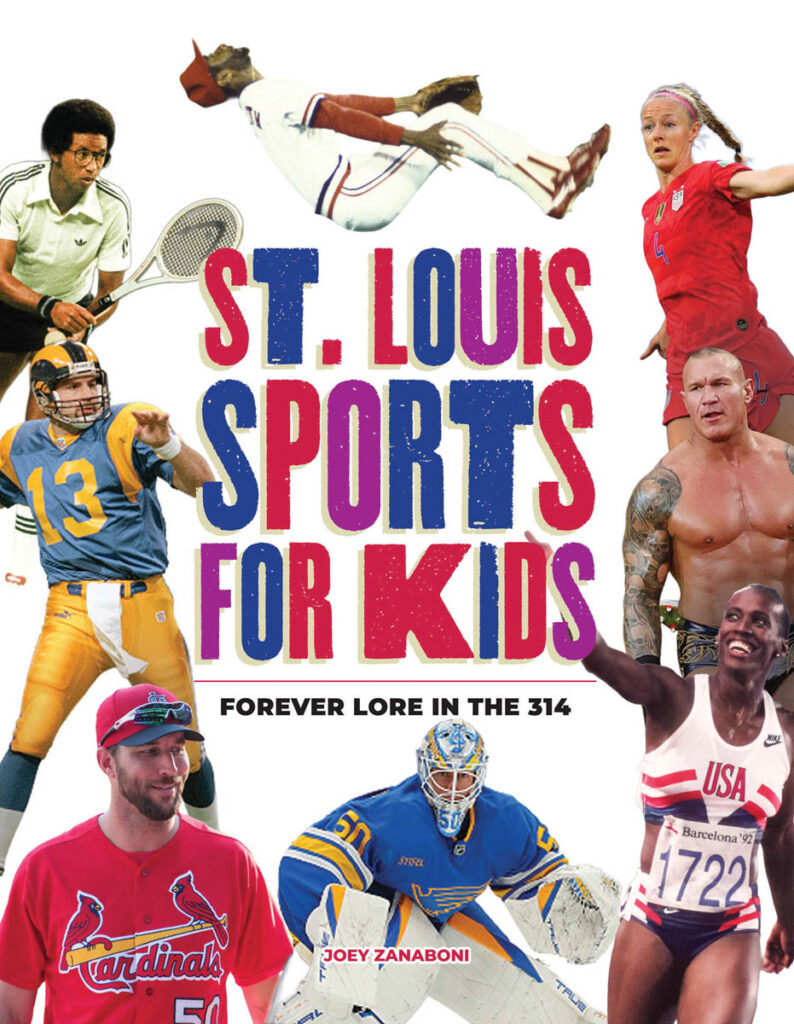
The book, recently released, is titled St. Louis Sports for Kids: Forever Lore in the 314. If you’re like most adults who used to be kids, you’ll also thoroughly enjoy the dozens of vignettes and vintage photos collected by author Joey Zanaboni for his lively volume, which is meant to be reread dozens of times, although it could be read very handily in one sitting, but first you have to pick it up, says Zanaboni, a lifelong St. Louisan. “Literacy is on the decline,” laments Zanaboni, a former teacher who now calls Maplewood home. “I hope to inspire kids to spend time with a book.” He’d also probably invite kids from 9 to 99 to spend time listening to his patter as a play-by-play announcer for our Major League Soccer franchise, St. Louis CITY SC, the 2023 expansion MLS team that plays its home games at Energizer Park in Downtown West; he also is the man at the mic for St. Louis Ambush, which nowadays has its main fan base farther west, playing at the Family Arena in St. Charles. You’d think with that much time under his belt announcing games that he’d have been a star player in high school or college. Not exactly. You’d more likely have seen him wearing roller skates and wielding a hockey stick in the alley, playing the game that it seemed most every south-sider enjoyed as a kid. “I was born right in the shadow of Ted Drewes,” he says, proudly. But he doesn’t have that distinctive south city accent. It could be another, from across the pond. “An occupational hazard is developing a British accent!” he points out, with a chuckle. A major emotional barrier for U.S. ‘football’ fans is when a game that’s out of time and scoreless stays that way. “Americans don’t know how to deal with a tie!” exclaims Zanaboni. “We’ve got to have a win.” And for his book’s subtitle we have to ease up on the area codes, too, to accommodate Jackie Joyner-Kersee, our iconic metro Olympic track and field champ from East St. Louis—the 618. Then there’s ‘the 636,’ I guess, but we’ve plenty to say grace over in the 314. And there’s more than baseball and hockey, although two world championships in those two pro sports are closest in the rearview mirror, even for senior citizens. That is, who in the Lou didn’t at least try and touch the Stanley Cup or take a selfie with it, when it was ‘let off the leash’ in 2019, so to speak? And who doesn’t remember Game 6 of the Redbirds’ World Series victory in 2011, for David Freese’s clutch homer, and it was a seven-game contest, for heaven’s sake? We’ve barely scratched the surface, of course. Remember we laid claim to a Super-Bowl-champion football team? Remember the National Bowling Hall of Fame? Oh, and there was pro wrestling at the Chase. Zanaboni talks about wrestling, but he talks about real sports, too. Like tennis; Arthur Ashe, and heroes in all sports at every level, from ‘Cool Papa’ Bell to Matthew Tkachuk. There’s washers, bocce ball and cornhole. Pickleball. Golf. Basketball! But wait; there’s more! You may need a ball, glove and stick to play, but none for chess, where you only must have your wits about you. Scoot on over to reedypress.com.