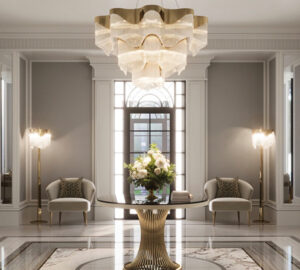

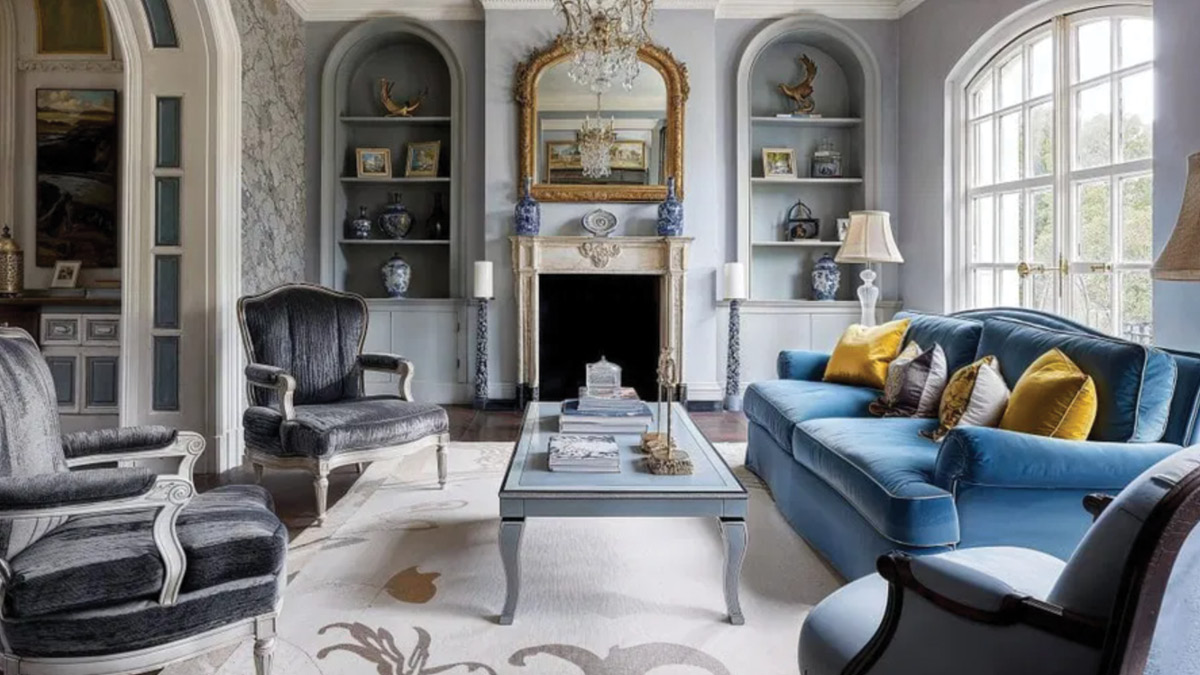
If you’re a fan of Brigerton or the works of Jane Austen, Regency may just be the interior design style for you. Inspired by British culture and style from around 1795 and 1837, the style focuses on luxury and ornate details. Mixed with modern silhouettes and amenities, it’s the perfect way to live your period piece fantasy.
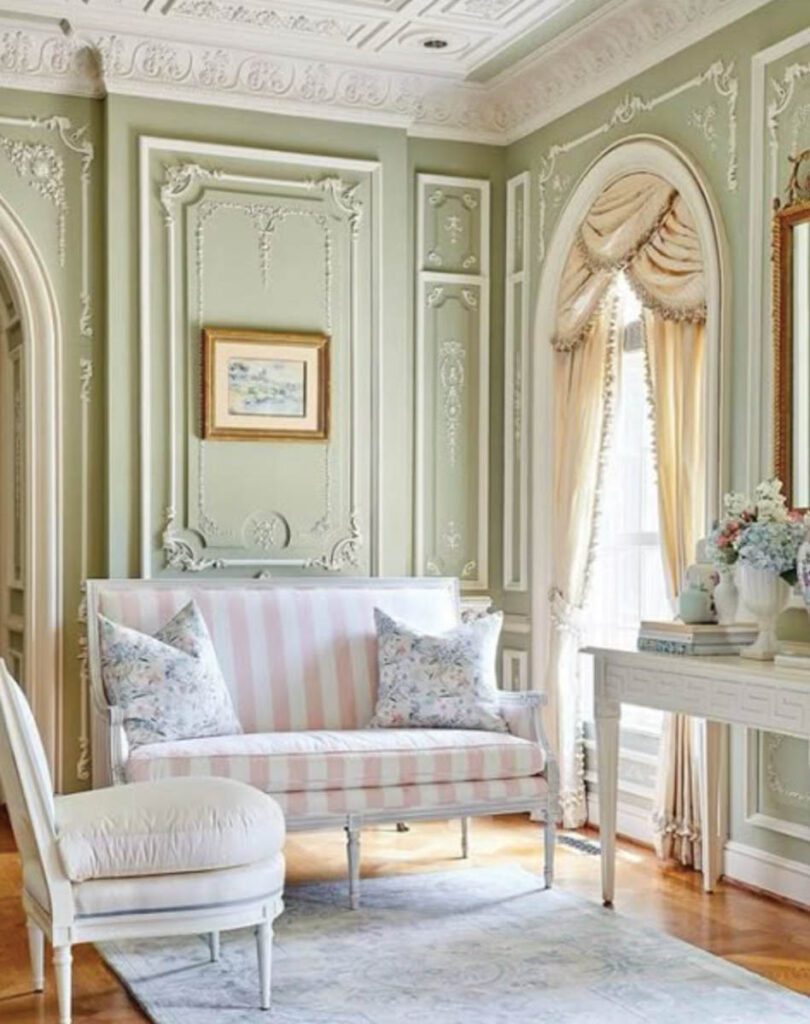
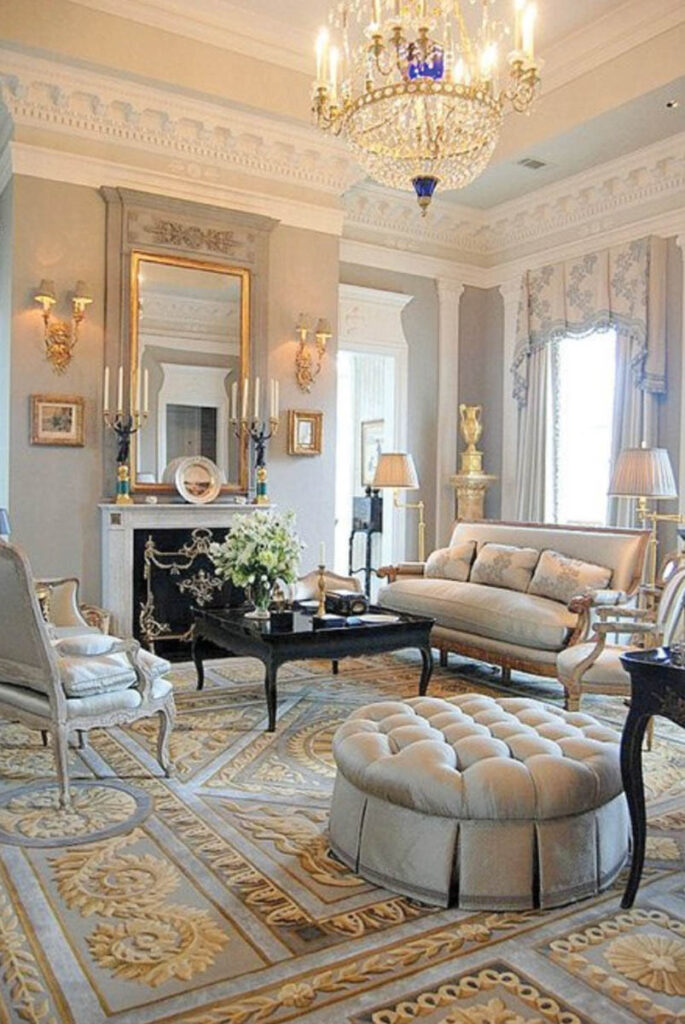
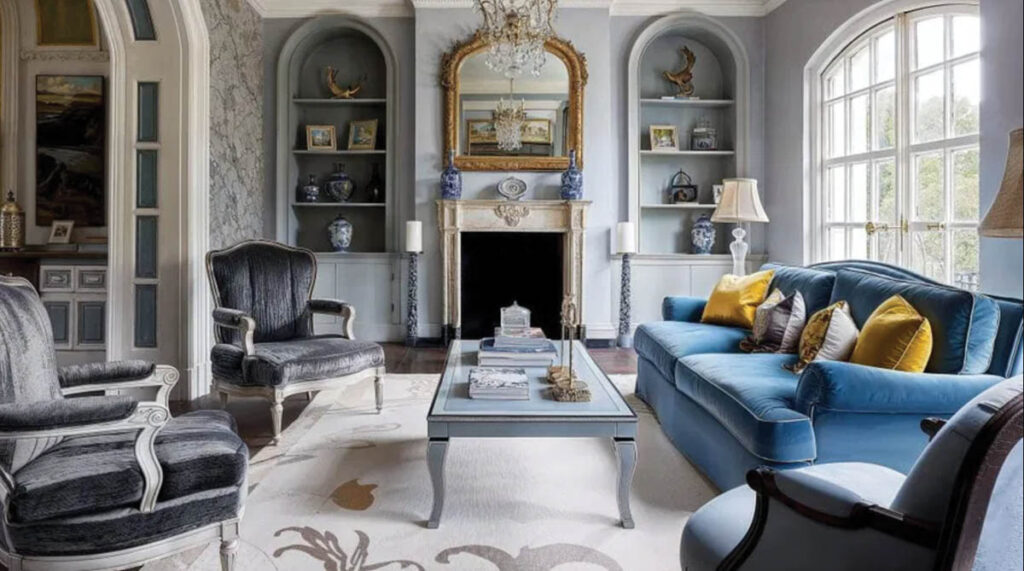
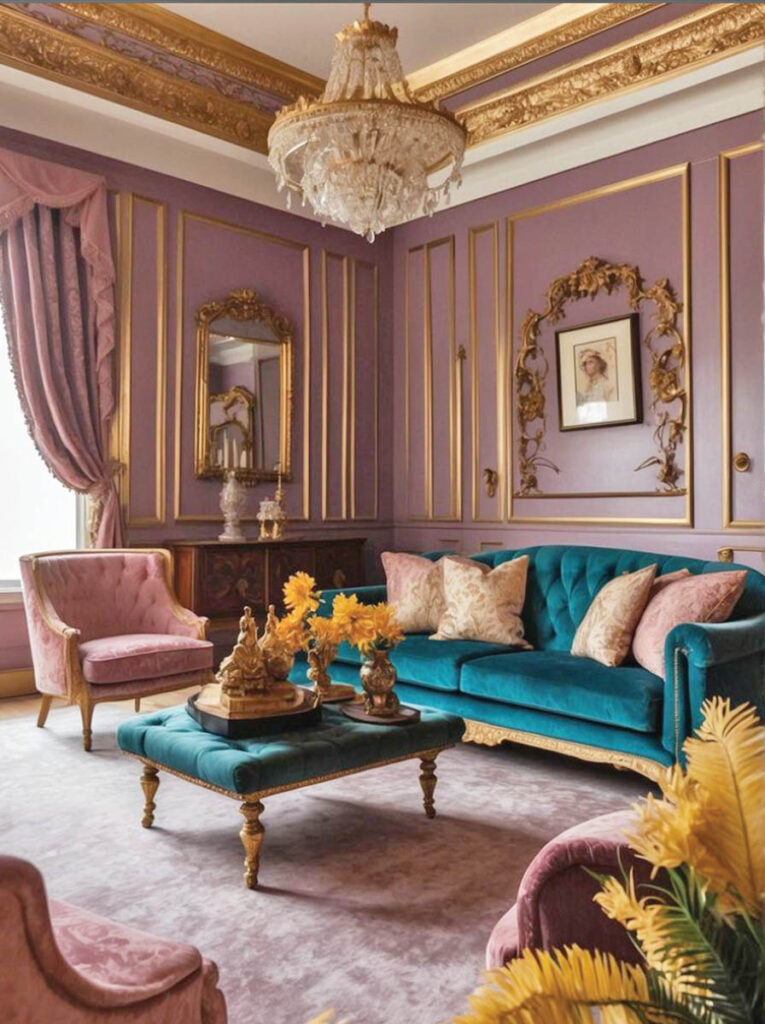
the hallmarks of regency design
The Regency period is named after the Prince regent, later King George IV, who ruled between 1811 and 1820 in place of his father. The era was heavily inspired by Classical design, borrowing motifs and elements from Greek and Roman antiquity. The focus is refinement, romanticism and grandeur.
- Luxurious fabrics like velvet, silk, and satin
- Ornate, delicate pieces, including caned seats, lion’s paw feet and gilded detailing
- Chandeliers
- Large, decorative mirrors with intricate, detailed frames
- A pastel color palette with the occasional inclusion of jewel tones.
- Patterns like chinoiserie and damask
- Architectural details like crown molding and decorative pillars
how to introduce it into your home
While it may be nice to consider living like Elizabeth Bennet and Mr. Darcy, most modern homes probably aren’t suited for the complete Regency treatment. However, ornate details and gilded touches can be a great way to introduce the style into your space in a way that is harmonious with a modern lifestyle
- Keep your color muted for the most part, but don’t be afraid to play with some bold hues. Introduce jewel tones in small ways, such as a powder room, reading nook or a single statement piece of furniture.
- Symmetry is something the Regency era borrowed from Classical design. Arrange furniture in pairs to create a formal, balanced feel.
- Layer window treatments to bring in both structure and softness.Combine flowing curtains with pelmets or swagged valances.
- Style bookshelves with items that reflect the era, such as busts, antique books and globes.
- Use wallpaper to create atmosphere and add sophistication. Regency-appropriate designs include chinoiserie, neoclassical motifs and embossed.
- Introducing Regency-inspired artwork. Some examples include large oil portraits, landscape paintings and Grecian-inspired reliefs.
Photos from pinterest.com.