

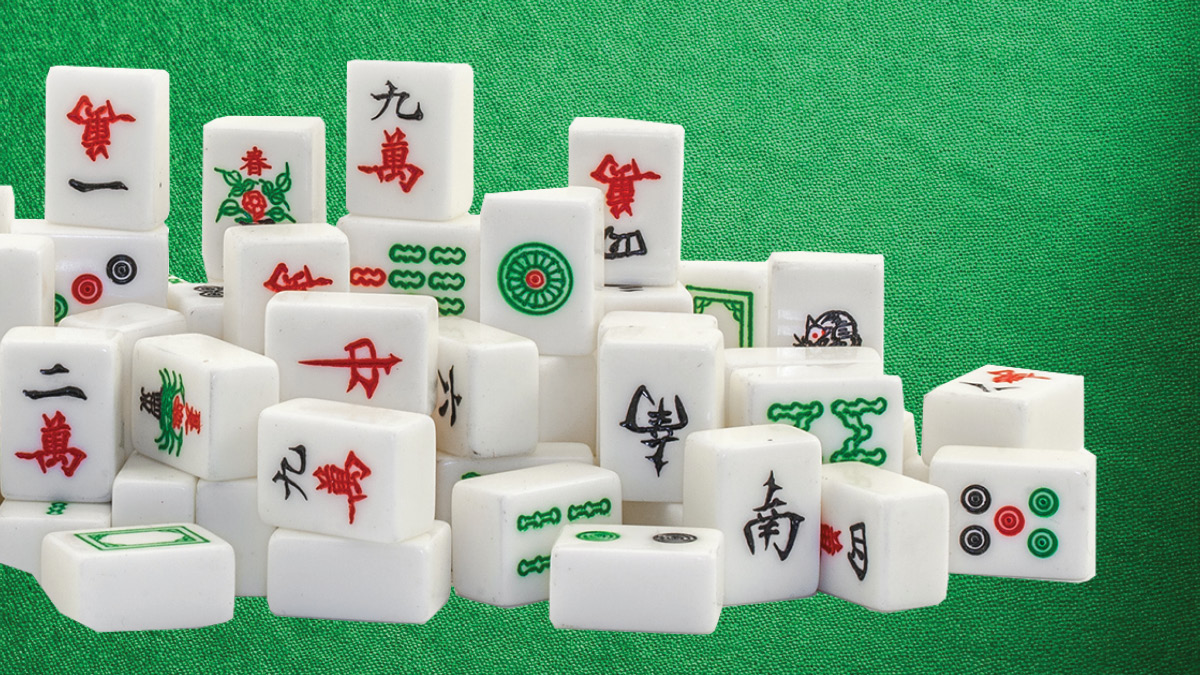
Mahjong is growing in popularity in the U.S.—and it’s not hard to see why. It’s more than just a fun pastime, the game can have several mental, social and physical benefits, especially for older adults. Whether you’re a beginner or an expert, tackling this tile game regularly can make a positive impact.
the basics
Mahjong is a four-person game of skill and chance that originated in China. There are many variations, but most feature players using tiles to try and create certain combinations. A mahjong set usually consists of 144 tiles based on Chinese characters and symbols. At the start of a game, each player usually receives 13 tiles. In turn, they draw and discard tiles until they have a winning combination.
types of mahjong
- American: The variation played by most local mahjong groups and clubs, this version uses a card that dictates winning hands and scoring. The card is created by the National Mah Jongg League and changes annually. To win, a player’s hand must match one of the combinations found on the card. American mahjong also uses joker tiles, which can be used to substitute any tile to complete a hand. This version of the game was influenced by the card game Gin Rummy.
- Chinese: There are many regional variations of Chinese mahjong, but the main differences between the American version of the game is the lack of jokers and scoring cards. It allows for a more flexible and personalized approach to play, but players must have a stronger understanding of scoring and hand combinations. It may not be the best choice for beginners.
- Japanese: Also known as Riichi, Japanese mahjong is another popular variation of the game. Like the Chinese version, it does not use jokers or scoring cards. It does include five extra red tiles that are not part of American or Chinese mahjong sets. It has a complex scoring system and play is based more on defense, with a focus on not discarding tiles that benefit other players.
benefits of mahjong
- Improved memory: The patterns and strategies associated with the game can help sharpen both the short- and long-term memory.
- Enhanced concentration: Focusing on the game can help improve concentration and attention span.
- Strategic thinking: Playing mahjong requires players to plan ahead, adapt and make decisions based on probability. The ability to quickly solve and respond to problems can decline with age, but the game can help reinforce these skills.
- Reduced cognitive decline: Studies have shown that mahjong can help slow cognitive decline, improve executive function and decrease the risk of conditions like dementia.
- Social connections: Playing with a group provides a social outlet and provides opportunities for conversation and connection.
- Reduced stress: Like with many hobbies, mahjong can provide a mental break to relax and destress.
- Improved sleep: Research indicates that playing mahjong is linked to better sleep quality. This is likely due to the mental and social stimulation that the game provides.
places to play in the stl
- Crestwood Community Center: The mahjong club meets on Wednesdays from noon to 3 p.m. and is open to beginners. The group plays American mahjong.
- Hearth & Soul: On Aug. 10, the store will host Mahjong 101/102 lessons for $50. For experienced players, free open play will be held on Aug. 27 from 4-6 p.m.
- Lovey’s on Lafayette: The event venue hosts open play every Tuesday from 5-8 p.m. For more information, visit loveysonlafayette.com.
- Mirowitz Center: Every Monday from 10 a.m. to 4 p.m., the center hosts a free game day. Along with mahjong, visitors can play bridge, poker and dominos. RSVP at mirowtizcenter.org.
- Paisley Boutique: The Webster Groves boutique regularly hosts 101/102 classes. Free open play is held on Saturdays. Registration and more information can be found on EventBrite.
- Facebook: To find more local meetups and lessons, check out Facebook groups like St. Louis Mahj Club and St. Louis Mah Jongg Players.