
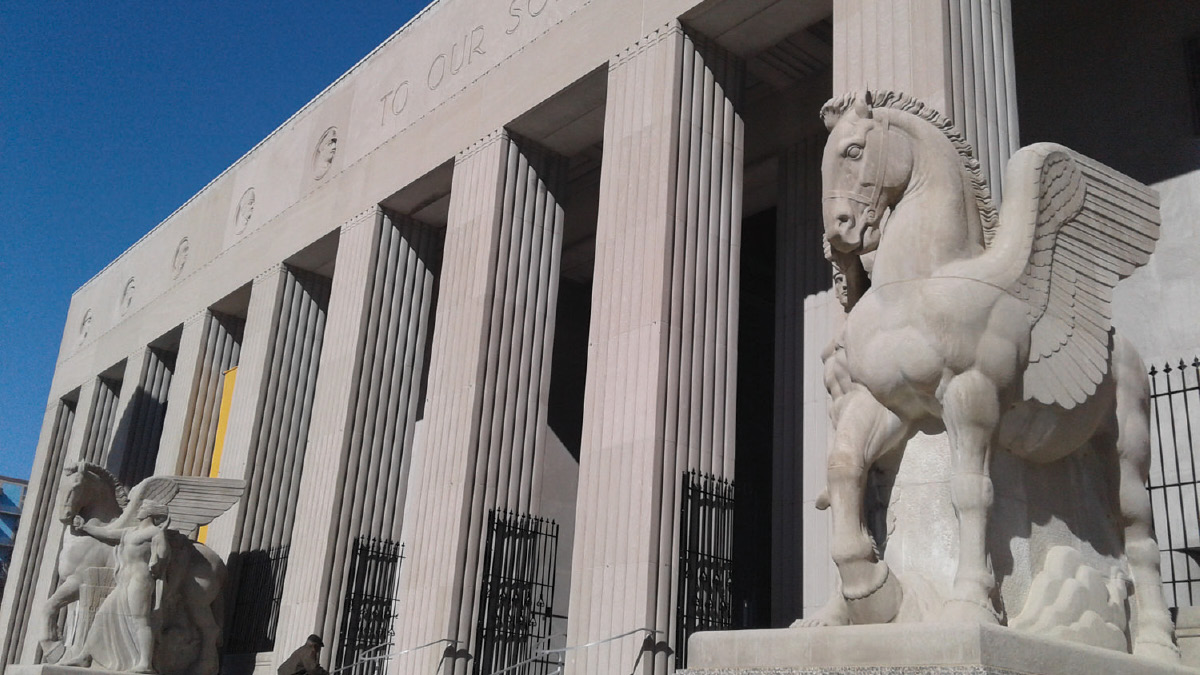
downtown | The Four Figures are impressive Art Deco statues sculpted by Walker Hancock and anchor each of the four corners of the Soldiers Memorial in downtown St. Louis. They represent four mighty, eternal human values— Vision, Loyalty, Sacrifice and Courage (pictured)— and will be explored through music performed in concert by the Chamber Project St. Louis on Nov. 23 at 2 p.m. on the memorial’s second floor, at 1315 Chestnut St. The concert is free, though tickets are required to attend. Visit chamberprojectstl.org. This concert is first in a series, Landmark Concerts, through which listeners can explore the StL with powerful, evocative music that brings to life the values embodied in the four figures. On Sunday, the chamber musicians will perform compositions by Elizabeth Poston, Nilofar Nourbakhsh, John Cage and Claude Debussy. The concert is presented in collaboration with the Landmarks Association of St. Louis and Soldiers Memorial Military Museum, part of the Missouri Historical Society.
cwe
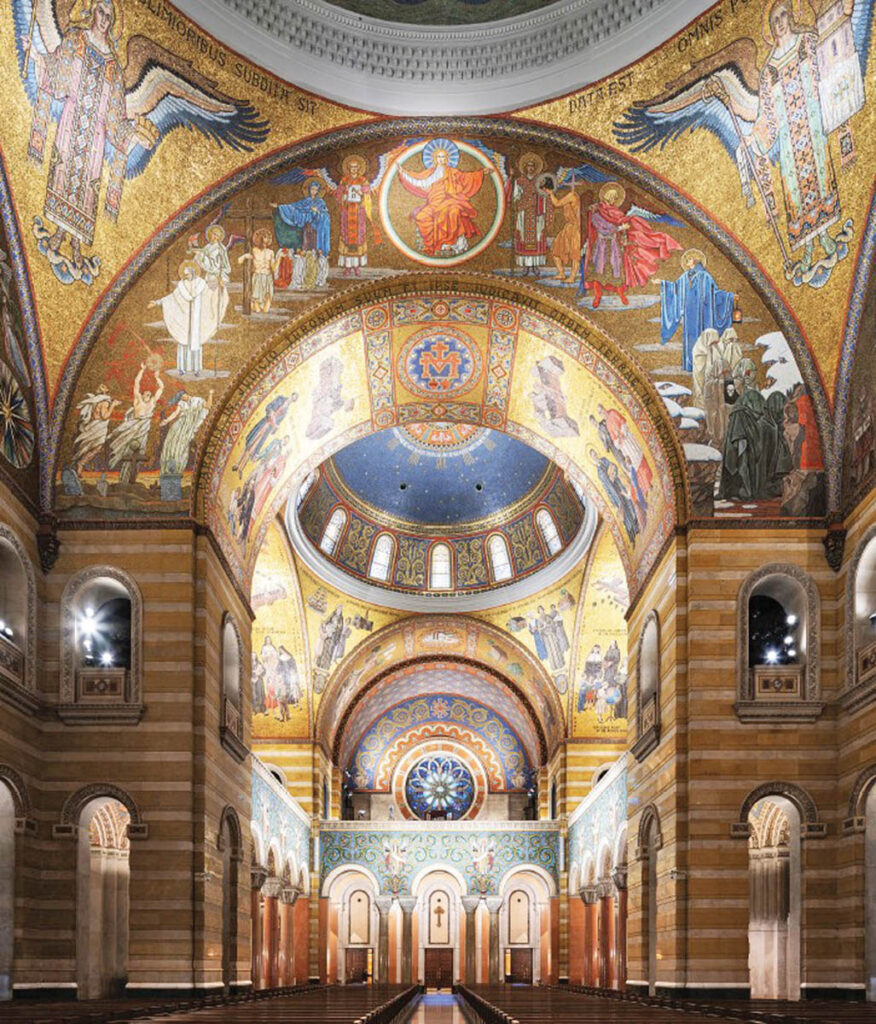
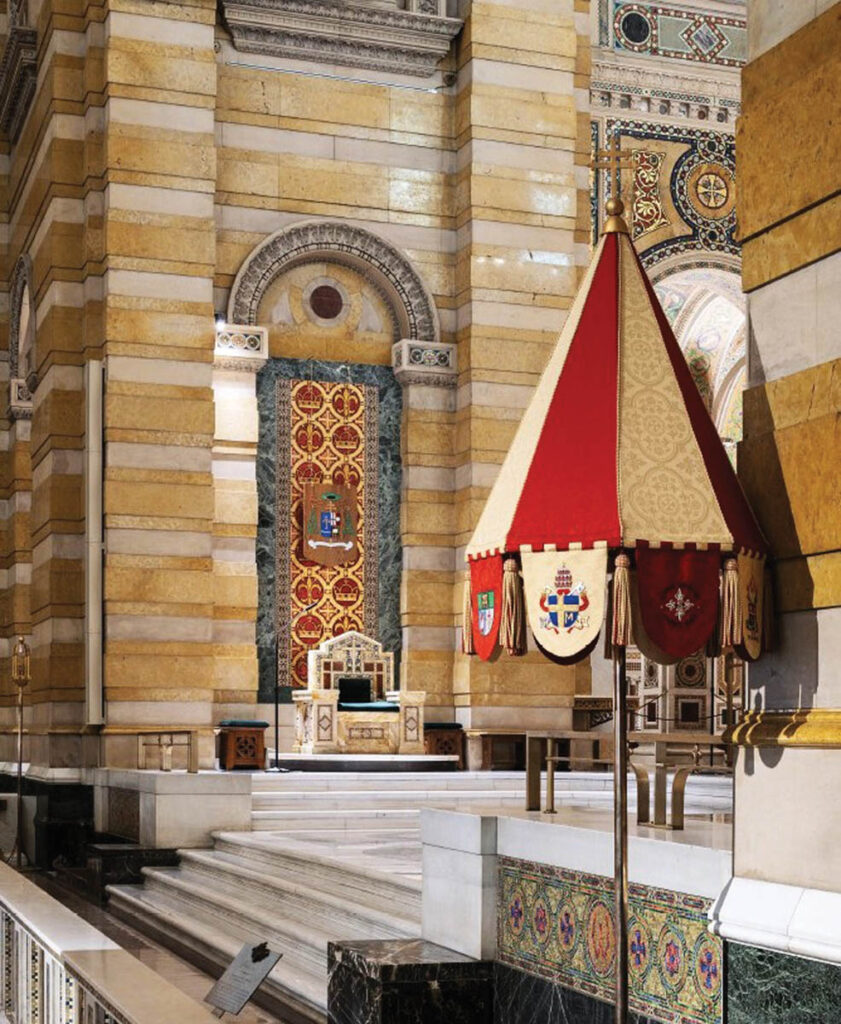
The story of the Cathedral Basilica of Saint Louis covers 352 years of history, illuminating key moments in the development of the United States and the Midwest, the establishment of the city of St. Louis and both the influence and growth of Catholicism. A new book does the so-called ‘New’ Cathedral proud, both through text and images—many taken by the author, John Guenther. The glorious cathedral is the apotheosis of buildings that were the seat of Catholicism in St. Louis and its diocese, spreading from here throughout the Mississippi River Basin. Predecessors were the Basilica of St. Louis: King of France (the Old Cathedral, 1834); St. John the Apostle & Evangelist (1860); and the Pro-Cathedral (1864–1914). Highlighting the landmark’s architectural and structural design and construction along with the design, installation and eventual completion of its magnificent mosaics, this book offers a chronological look at the historic foundations of one of the great cathedrals of the world. Starting from when the Marquette and Joliet Expedition traveled down the Mississippi River in 1673, the story of how our magnificent cathedral came to be is remarkable. Join Guenther, an architect, educator and historian, as he seeks to ‘connect the dots’ of history by taking readers through a visual journey of the key events that led to construction of the breathtaking church and adjacent buildings that make up the diocesan complex at Lindell Boulevard and Newstead Avenue in the CWE. Learn about the vision, determination, persistence, collaboration, creativity and innovation on the part of so many for the design and realization of the beloved Cathedral Basilica of Saint Louis. Construction began in 1907 and wrapped up in 1914, save the awe-inspiring collection of mosaics, the world’s largest, which took decades to complete. For more, visit reedypress.com.
downtown west
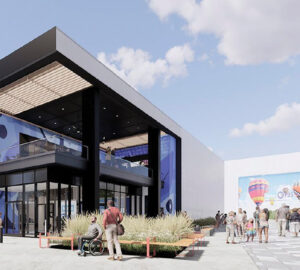
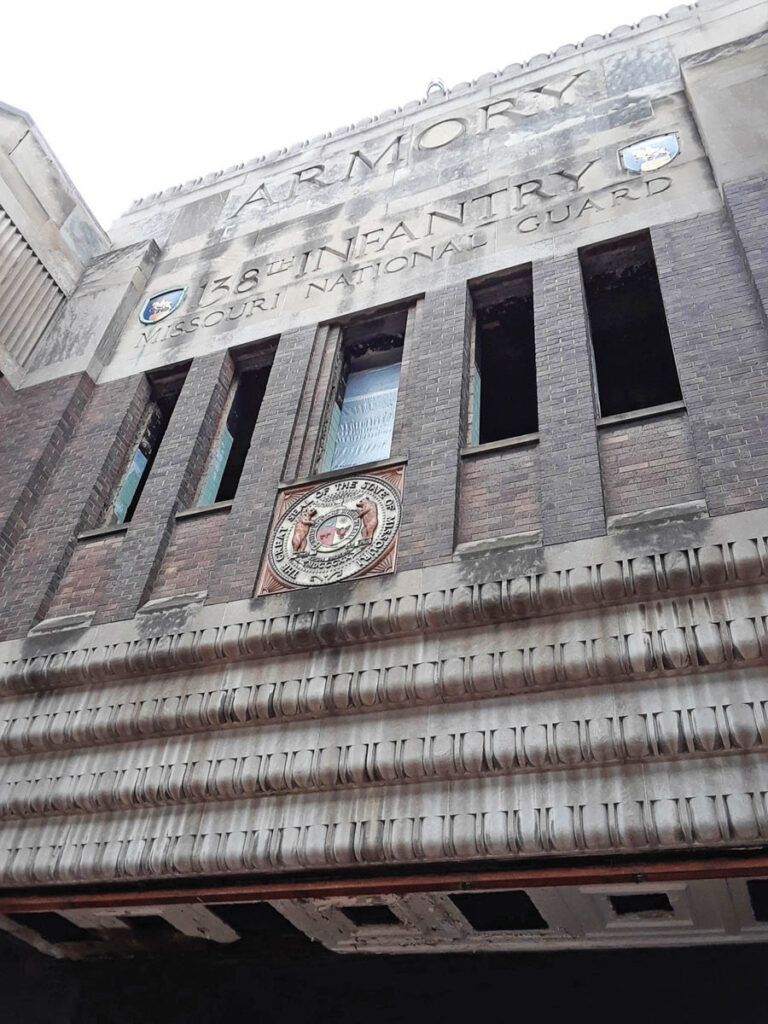
Built in 1938 for the Missouri National Guard’s 138th Infantry Regiment, the St. Louis Armory has since been revived as a tennis venue and concert location—temporarily. It was renovated a few years ago and reopened in 2022 to great fanfare as a sports and entertainment venue, but financial woes led to its sudden and indefinite closure last year. The entertainment venue, though, hadn’t been the original redevelopment plan for Greenstreet Real Estate Ventures. The Armory was going to be a 250,000-square-foot multi-use project that included several floors of office space before the pandemic wipred demand for premium office space. Recently, there has been discussion of the Armory being used as an emergency shelter for the unhoused. In light of the May 16 tornado that destroyed thousands of homes in north St. Louis, officials have considered it as a temporary or emergency shelter option, especially during cold weather or disaster response efforts. In any event, the Armory remains closed, its future uncertain. Once envisioned as not only a crown jewel of St. Louis nightlife, it now stands as a symbol of ambitious redevelopment plans derailed by unpredictable events and financial instability.
notable neighbors
eureka
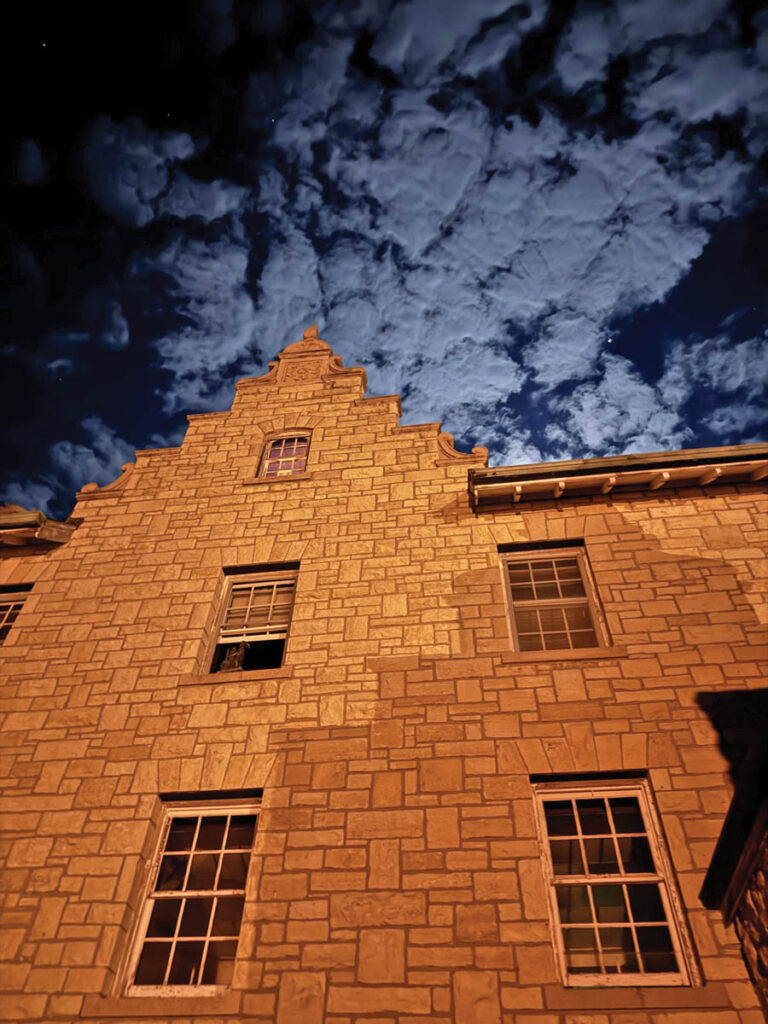
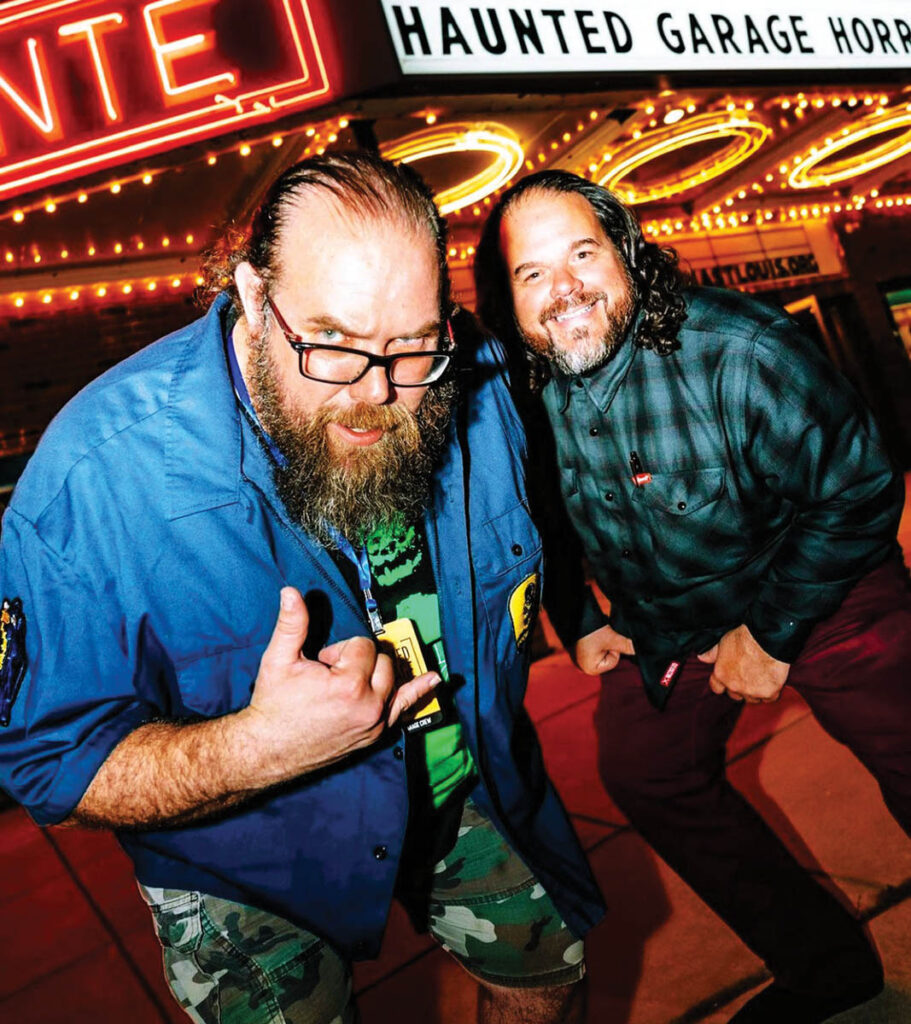
Things don’t only go bump in the night in a house that’s empty except for you, all alone inside—or so you thought. Anyone familiar with Stephen King’s Christine can assure you that classic cars might give you the creeps, too. Jeremy King and Franki Cambeletta may spend months trying to get a 1961 Caddy to turn over, but it’s a very rare occurrence when a car decides to turn over on its own and tool around with nothing but mischief and mayhem rumbling under the hood, as was the case with the malevolent force possessing a 1958 Plymouth Fury in the 1983 horror novel that became a movie of the same name. That is, nothing quite that supernatural has happened ‘mechanically’ to Cambeletta and King, gearheads and partners in The Haunted Garage and paranormal investigators by avocation. Ghost hunters, that is. King was behind the wheel of a car he was working on one night when he noticed something amiss. Actually, he saw something that shouldn’t have been there. “I glanced at the rearview mirror and saw someone in the back seat,” he recalls over coffee on Main Street in Eureka. And it wasn’t Cambeletta. But he was sure there was no one else around when he was working on the car. Automotive work isn’t the main focus of these paranormal aficionados, by any means, notes Cambeletta. He’s working pro bono on establishing Emmaus Village in Marthasville, Missouri, as a destination for ghost hunters far and wide. Owners Ben and Mandi Johnson have a vision of re-establishing the village, five buildings and 50,000 square feet in total, as a place for ghost hunters to stay and explore the grounds with their specialized electronic equipment. Ghost hunters—paranormal investigators, if you will—are an unusual breed, as any number of cable series and podcasts can show you, including one hosted by Cambeletta and King, who aren’t tilting at windmills here. They’ve experienced enough out-of-the-ordinary happenings and feelings first-hand to count themselves among the faithful. And the Emmaus Asylum, originally built with locally quarried stone in 1859, is the main focus here. “It was originally built as a home for the ‘feeble-minded’,” Cambeletta says. Many long-since-disavowed medical procedures, such as lobotomies, were performed here. “We believe a lot of the hauntings are related to closure,” says Cambeletta. “The forest that sits behind the asylum is very active. Even skeptics feel it there. The sorrow is palpable. It’s a very heavy place.” To learn more about the asylum and the village at large, visit emmausasylum.com. It’s a place where one may book events for private, team or corporate investigations. Then, if you dare, take a peek at what else is rolling at hauntedgarage.net. You can learn about the partners’ weekly podcast there. It helps to explore the village’s Facebook page, as well—if you have the nerve, of course.