
Lasers—perhaps they call to mind a supervillain menacing James Bond or maybe a toy you use to distract your feline friend. While the word may concoct certain images in our head, the reality is lasers have been a part of dermatology since the 1960s. Today, they are more popular than ever. We’re breaking down some of the common uses, side effects and results of laser resurfacing.
laser treatments can be used for:
- Fine lines and wrinkles
- Age spots
- Uneven skin color or texture
- Sun damage
- Acne scars
you may not be a good candidate for laser resurfacing if you have:
- Very dark skin.
- Active acne.
- Deep wrinkles.
- Excessive or sagging skin.
- An active or recent cold sore breakout.
ablative vs. nonablative
Laser resurfacing can be done with a variety of devices.
- Ablative: This method uses a beam of energy to destroy the outer layer of skin while heating the underlying layers and stimulating the growth of collagen. As the damage heals, the treated area becomes smoother and together. Common types of ablative lasers include carbon dioxide (CO2) lasers, erbium lasers and combination systems.
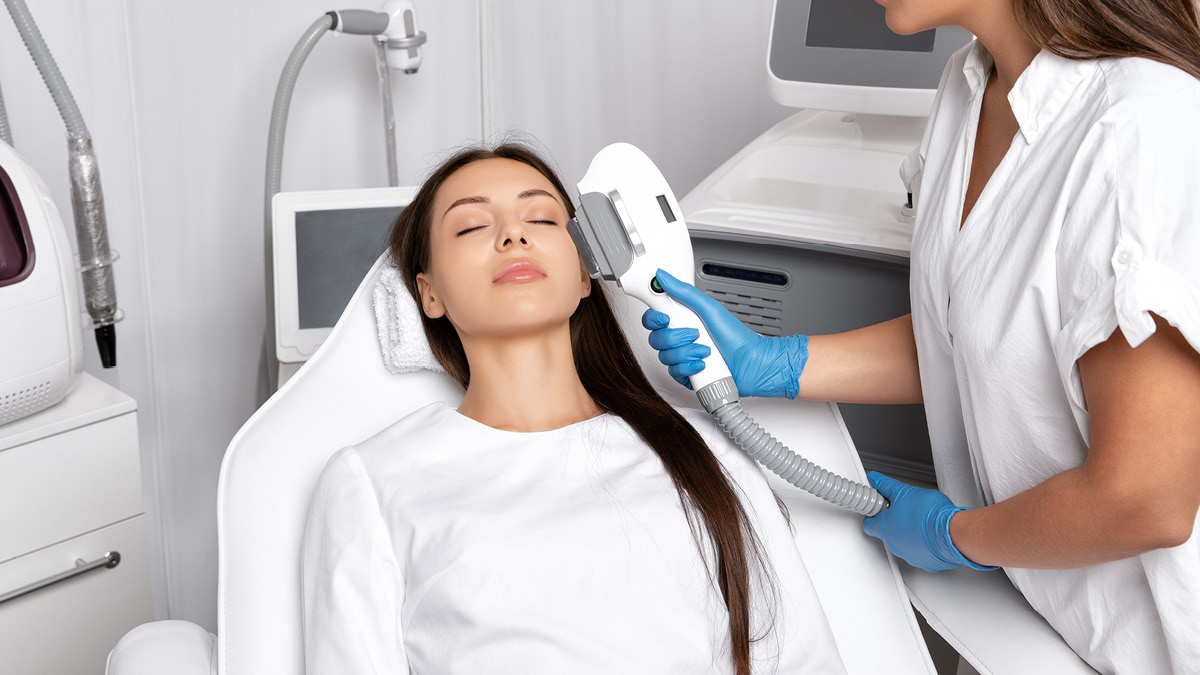
- Nonablative (light source): These devices are less aggressive, not damaging the upper layer of skin. Nonablative lasers use heat to stimulate collagen production, offering more subtle results than ablative lasers but also less side effects and minimal downtime. Two popular types are erbium (Er:YAG) and intense pulsed light (IPL).
how to prepare for laser treatment
- Stop tanning and avoid heavy sun exposure.
- Don’t get deep facial peel procedures, such as chemical peels and dermabrasion, for about four weeks before treatment.
- Avoid medications that cause photosensitivity for at least 72 hours prior to treatment.
- Take antiviral medication if you have a history of herpes or shingles as your health care provider directs.
- Apply a topical retinoid to prepare your skin for the procedure if directed.
results
Laser treatments have gradual and progressive results, especially nonablative options. According to the Mayo Clinic, it usually takes two to four treatments to get noticeable results. Sessions should be scheduled over weeks or months. Improvements caused by laser treatments can last for several years. Sun damage can reverse the impact of laser resurfacing. It’s important to diligently use sun protection following treatment. Applying an SPF can also help prevent hyperpigmentation and other changes to the skin as well.
care for you skin post-treatment by:
- Avoiding scratching or picking the treated area. This will help you avoid infection.
- Cleanse the treated area two to five times a day. Your treatment provider will give you instructions on frequency.
- Sleep on an extra pillow for the first few days after the procedure. The Cleveland Clinic recommends this to reduce swelling.
- Apply a cool compress or an ice pack for around 15 minutes as needed, during the first 24 to 48 hours.
- Use an occlusive moisturizer, like petroleum jelly, or antibiotic ointment to protect the skin until it heals.
- Don’t do any activity that causes flushing for around two weeks after treatment.
possible side effects and risks
here are some risks with laser treatments. Side effects will be milder and less likely with nonablative methods.
- Inflamed, swollen and itchy skin. Treated skin may itch, swell or have a burning sensation. With ablative treatments, inflammation may last for several months. For nonablative treatments, redness usually lasts for a few hours to a day.
- Changes in skin color. Skin can become darker or lighter after laser resurfacing—this is known as post-inflammatory hyperpigmentation or post-inflammatory hypopigmentation. People with darker complexions have a higher risk of long-term skin color changes.
- Acne. Tiny white bumps, called milia, can form after laser treatments. The application of bandages and certain products can make them more likely to form as well as lead to acne.
- Scarring. Ablative treatments have a higher risk of leaving scars.
- Infection. Laser treatment can lead to bacterial, viral or fungal infections. It commonly causes flare-up of the herpes virus, which causes cold sores.
Sources: Cleveland Clinic, Mayo Clinic