

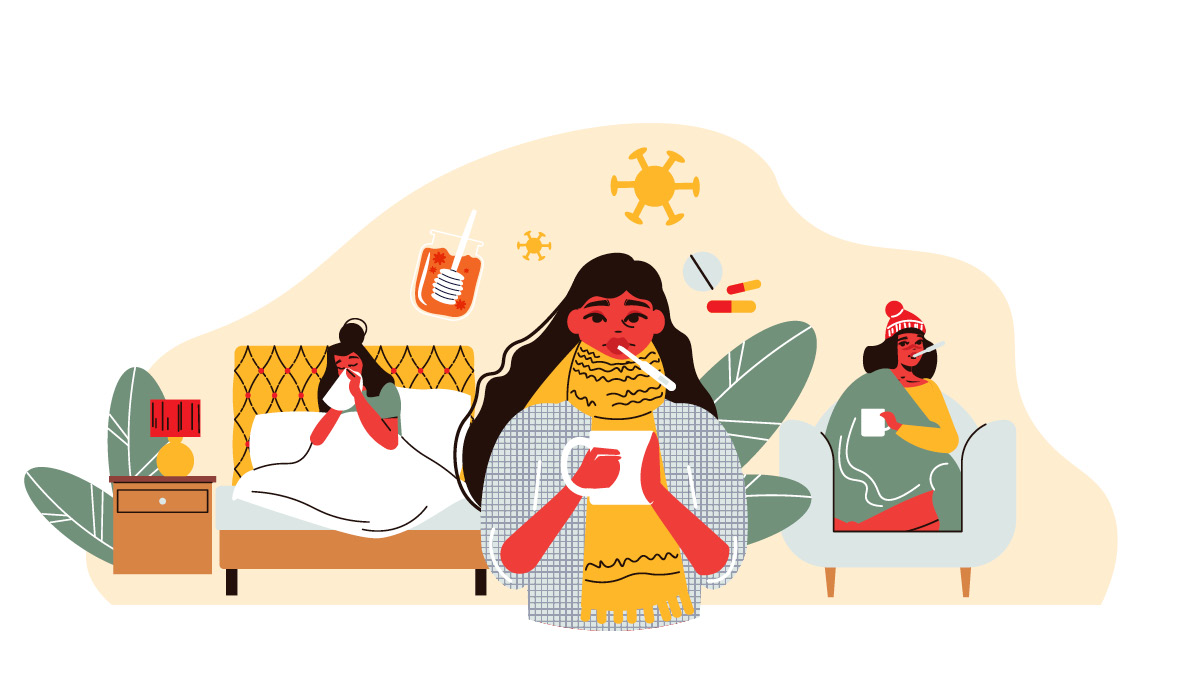
While St. Louis may still be experiencing summer-like heat, there’s no question that fall is on the way. Along with beautiful leaves and pumpkin spice everything, the season can bring some unwanted things as well. Autumn is a time when viruses circulate more heavily and seasonal allergies may start flaring up. We’ve got some tips to keep your fall happy and healthy.
VIRUSES
the flu
In the U.S., flu season typically begins in October and lasts through May. Symptoms related to the virus tend to come on quickly—usually two or three days after you come into contact with it. Common symptoms include fever, sore throat, congestion, coughing, fatigue, headache and muscle aches. For people in good health, the flu usually goes away in a week or two, but there can be complications, such as croup and sinus or ear infections.
the common cold
Odds are we’ll all suffer from a cold this fall or winter—it is ‘common’ afterall. According to the Mayo Clinic, adults on average have two to three colds a year—kiddos have even more. The term cold refers to a viral respiratory infection that causes mild symptoms in the upper respiratory tract. This can include a stuffy or runny nose, sore throat, coughing and sneezing. Most people recover from a cold in seven to 10 days.
rsv
Respiratory syncytial virus (RSV) causes infections of the lungs and respiratory tract. The virus is so common that most children are infected before age 2, according to the Mayo Clinic. For most people impacted by the virus, the symptoms are very similar to a cold—congestion, sneezing, low-grade fever, coughing and headache. In more severe cases, it can spread to the lower respiratory tract, causing complications like pneumonia and bronchiolitis.
covid-19
Even five years after the start of the pandemic, COVID-19 continues to circulate. Typically, COVID-19 symptoms start to manifest two to 14 days after exposure and can include a dry cough, shortness of breath, loss of taste and smell, fatigue and digestive issues. Other symptoms more closely resemble a cold, such as congestion, runny nose or sore throat. Most people recover without long-term effects, but some people have symptoms that continue for months.
10 tips for fighting off common viruses
- Get vaccinated for the flu.
- Distance yourself from individuals who you know are ill.
- Wash your hands frequently.
- Regularly disinfect high touch surfaces, such as counters or your children’s toys.
- Stay hydrated—even if you get sick, drinking enough water can help reduce symptoms.
- Dress appropriately for the weather.
- Keep an eye on local health advisories.
- Try to get adequate sleep to support your immune system.
- Regular exercise can boost your immune system, and it comes with the added benefit of helping counter seasonal mood changes.
- Ensure good ventilation in indoor spaces to reduce the risk of airborne infection.
ALLERGIES
In the fall, there is an increase of both indoor and outdoor allergens. The most common indoor irritant is mold spores. Their growth spikes in the warmth and humidity of summer, and they persist through the fall. Outside, ragweed pollen is the biggest cause of seasonal allergies. Its levels begin to rise in late August, and it can hang around until the first frost.
To avoid sneezing, congestion, a runny nose and other bothersome symptoms, there are simple steps you can take to manage your exposure to allergens.
- Monitor pollen count. Check pollen counts in your area—they’re often included with TV or radio weather reports or you can easily find them online. To avoid pollen in your home, don’t leave the windows open when pollen counts are high. Limit outdoor activity in the morning or on dry, windy days because that’s when pollen counts are highest. The best time to head outside is after it rains, which helps clear pollen from the air.
- Wear a mask when mowing the lawn or doing other outdoor chores. To avoid allergens when raking leaves or completing other seasonal outdoor work, make sure your nose and mouth are covered.
- Clean your vents before turning on your heat for the first time. Allergens can get trapped during the spring and summer, and they’ll fill the air once the furnace turns on. Also use a HEPA filter in your heating system to remove particles from the air.
- Use a dehumidifier. Removing moisture from the air will help stop mold and dust mites from thriving in your home.
- Groom and wash your pets regularly. If they spend time outside, that will keep them from tracking pollen or other allergens inside.
- Rinse your sinuses. Rinsing is an easy way to reduce congestion. It directly flushes out mucus and allergens from your nose.
How can I tell my allergies apart from fall illnesses?
The common cold, seasonal allergies and COVID-19 can sometimes manifest in similar ways. Despite some indistinguishable symptoms, there are some key differences. Think about your history and consider what symptoms you’ve previously experienced in the fall. If you’re dealing with a fever, aches and pains, nausea or a sore throat, odds are it’s not your allergies making you sniffle and sneeze. Allergy symptoms also tend to last longer than the common cold.
Sources: Mayo Clinic, The University of Chicago Medicine