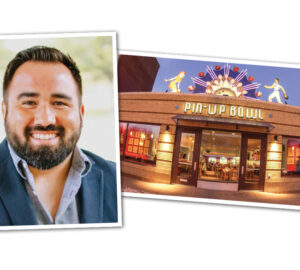


When it comes to St. Louis’ arts and entertainment footprint, Chris Hansen has taken some big steps to help maintain that reputation. As executive director of the Kranzberg Arts Foundation, he’s been instrumental in reshaping the cultural landscape, including developing important venues like The Grandel Theatre, The Big Top and The High Low. You can now add The Key Burger Bar and Boogie to the list—and there’s more on the way.
What brought you to Grand Center?
I’ve been in Grand Center for 13 years. First, I was called in by Grand Center Inc. to help breathe some life into and transform the Kranzberg Center for the Arts. In 2013, we opened up the original Dark Room. That project came about to stop a check cashing place from going into the space. We created a wine program with Pinnacle Imports, and the International Photography Hall of Fame curated a photography program. The result was a new kind of venue for Grand Center.
What happened next?
After working with Ken Kranzberg on the Dark Room, he asked me to work on The Marcelle. At the time, the Kranzberg Arts Foundation was offering angel investments to arts projects, but it wasn’t operational. I worked with them for a year to build the mission and operating arm of the foundation—then they asked me to run it. At first, I didn’t think it was for me. I was an entrepreneur. I didn’t see myself as the executive director of a nonprofit, but I realized we could make a big impact together. That’s what got me to this place today. It’s been a great honor, and we’ve done a lot of great work.
With The Key Burger Bar and Boogie, the buildings were going to be demolished.
The St. Louis preservationist community wanted to save these buildings and started a rallying cry that got a lot of people invested. We knew if we were going to save them we had to build something for St. Louis. We brought together some of the things that the community loves the most: historic buildings, eating with our hands, dancing to party bands and sports teams. We brought this historic venue back to life. We have an archival history-based art exhibit program, dancing and live music every weekend and a great sports program with watch parties and podcasts. We’re meeting all kinds of new St. Louisans, and when people come to town, it’s a great way to show off what we really look like as a city.
What makes St. Louis’ cultural landscape so attractive?
Per capita, no city has our creative capacity and cultural legacy. St. Louis didn’t birth one genre. We birthed giants of the literary, musical and visual arts. It’s a part of our DNA. We’ve got to own that and celebrate it every day. Music, art and entertainment are the things that St. Louis needs to move the city forward.
What item truly represents St. Louis—be it cultural, entertainment or food?
I don’t know that’s there’s one thing. I think what makes us different is the depth and breadth.
Your go-to choice for good food.
I love Chiang Mai in Webster Groves—it has my favorite beef soup. That’s really what I crave the most right now.