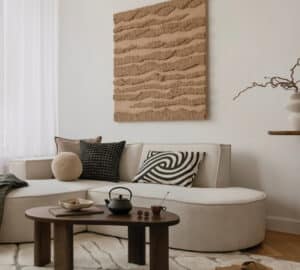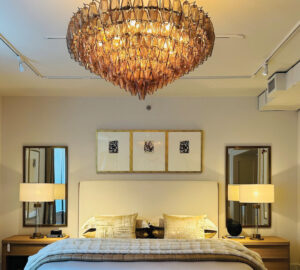

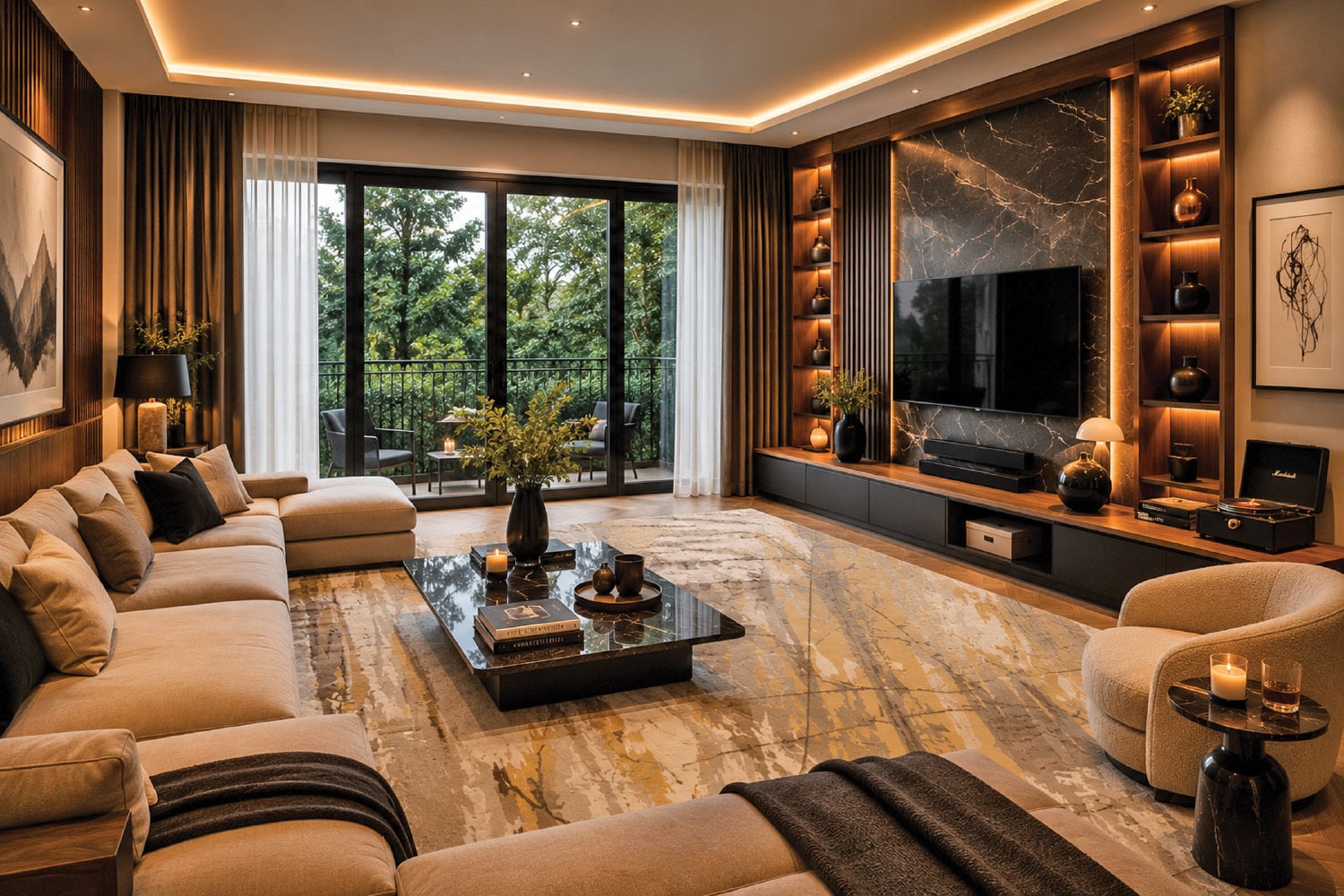
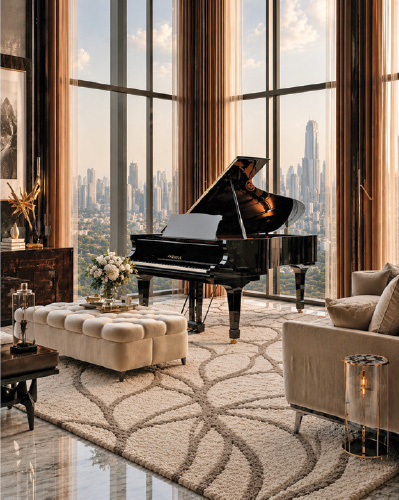
Growing up, our piano sat in the center of our great room. Surrounded by lush sofas, layered drapery and the warmth of family life, it became much more than an instrument. It was where we gathered, where we listened and where I often found a moment of quiet in an otherwise busy world.
Looking back, I realize that room taught me something important about design. The most memorable spaces are not defined solely by what we see—they are shaped by what we hear and how they make us feel.
Music has always played an important role in our lives. It influences mood, evokes memories, reduces stress and creates connection. Long before streaming services and wireless speakers, music was often at the heart of the home. A piano in the living room, records spinning in the background and family gathered together created an atmosphere that was both comforting and meaningful.
Today, we are witnessing a fascinating evolution in design. Vintage is returning in a meaningful way, paired seamlessly with sophisticated technology. Record players, treasured pianos and curated vinyl collections are finding their place alongside hidden speakers, integrated sound systems and smart-home technology. Sound is no longer an afterthought—it is becoming an intentional layer of design.
This shift was evident at this year’s Milan Design Week, where designers explored sound, sensory experiences and immersive environments as essential components of modern living. The conversation extended beyond furnishings and aesthetics to how spaces influence mood, well-being and human connection through all of the senses. As homes increasingly serve as places to work, entertain, recharge and connect, designers are paying greater attention to how a room sounds—not just how it looks.
At the same time, our homes are expanding beyond four walls. Indoor and outdoor living spaces are blending together more effortlessly than ever before. Music now travels from family rooms to terraces, outdoor kitchens and poolside lounges, creating a continuous experience that connects people and spaces. Thoughtfully designed environments can offer moments of calm, creativity and restoration in our increasingly busy lives.
The future of interior design is becoming more immersive. We are designing not only for beauty, but also for experience. Music contributes to our well-being, enhances entertaining and helps define how a space is used. A room that sounds beautiful often feels beautiful as well.
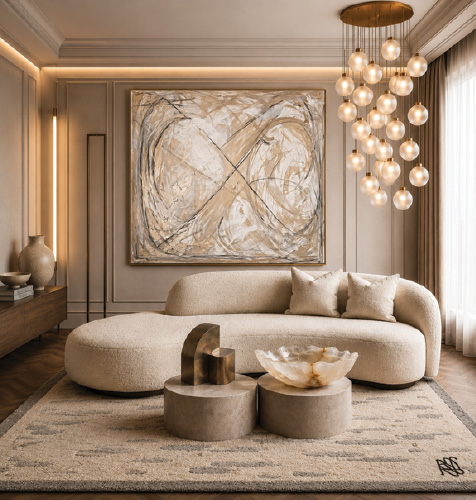
Faith’s Design Notes: Creating a Home That Sounds as Good as It Looks
- Incorporate curved seating arrangements that encourage conversation and connection.
- Layer custom rugs, upholstered furnishings and drapery to soften acoustics and reduce echo.
- Create a dedicated listening corner or music room, even if it’s simply a comfortable chair, excellent lighting and a favorite playlist.
- Blend vintage and modern by pairing record players, pianos or heirloom instruments with discreet technology.
- Consider speakers as part of the design. Today’s options can be integrated into millwork and shelving or even disguised as artwork.
- Extend music outdoors with thoughtfully placed speakers that seamlessly connect indoor and outdoor living spaces.
As designers, we spend a great deal of time considering color, scale, texture and light. Yet some of the most meaningful moments happen when music fills a room, conversations linger a little longer and a space simply feels right.
The future of interior design is not just visual—it is experiential. It is about creating homes that engage all the senses. Because long after we leave a beautiful room, we often remember how it made us feel—and sometimes, the music that filled it.